
Retailers in India often aim to boost sales by increasing the Average Order Value (AOV). However, this isn’t always the most effective strategy for cross-selling. Instead, market basket analysis can uncover hidden patterns and opportunities that drive sales and customer loyalty. For example, a popular grocery chain in India noticed that customers buying baby products frequently also purchased organic foods. This insight led to targeted promotions that significantly boosted sales.
What is Market Basket Analysis and How Does it Work?
Market basket analysis is a statistical method that reveals patterns in customer purchases. It’s essential for cross-selling in retail because it uncovers opportunities that might not be apparent otherwise. In the past, retailers focused on AOV, but market basket analysis provides a more insightful approach. For instance, a large electronics retailer in India used market basket analysis to discover that customers buying laptops also frequently purchased external hard drives and mouse pads. This led to a significant increase in sales.
Benefits of Market Basket Analysis for Cross-Selling in Retail
Market basket analysis offers several advantages for cross-selling. By segmenting products and identifying cross-selling opportunities, retailers can increase sales and customer loyalty. For example, a mid-size apparel chain in Tier 2 with 40 stores saw a 20% sales uptick after implementing market basket analysis. Similarly, a leading e-commerce company in India achieved a 25% sales boost after using market basket analysis to identify cross-selling opportunities. They found that customers who bought home appliances also frequently purchased home decor items, leading to targeted promotions that drove sales.
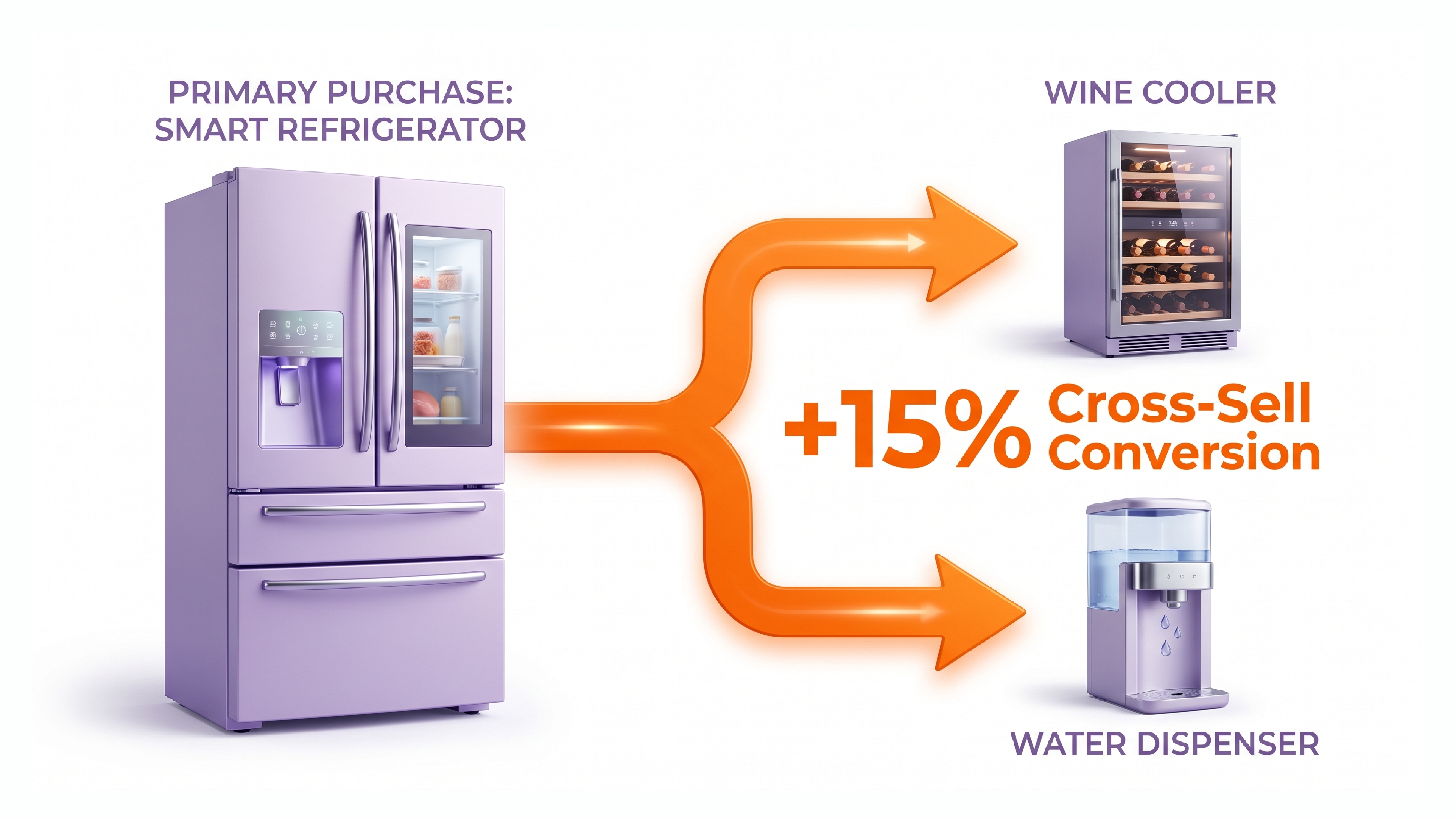
Concrete Example with Real Numbers
Consider a large retail chain that specializes in home appliances and electronics. After implementing market basket analysis, they noticed that customers who purchased refrigerators frequently also bought wine coolers and water dispensers. By analyzing transaction data, the retailer identified that 30% of refrigerator buyers also purchased a wine cooler and 25% bought a water dispenser. Based on this insight, they launched a targeted marketing campaign offering a discount on wine coolers and water dispensers to customers who added a refrigerator to their cart. This campaign resulted in a 15% increase in sales of these secondary items and a 10% increase in overall AOV.
How to Implement Market Basket Analysis for Product Segmentation
Implementing market basket analysis requires collecting and analyzing customer transaction data using clustering and association rule mining techniques. This allows retailers to segment their products and identify cross-selling opportunities. For instance, a large retail chain might find that customers who purchase winter jackets also often buy gloves and hats. This insight could inform targeted marketing campaigns promoting these items to winter jacket buyers.
Market Basket Analysis Framework
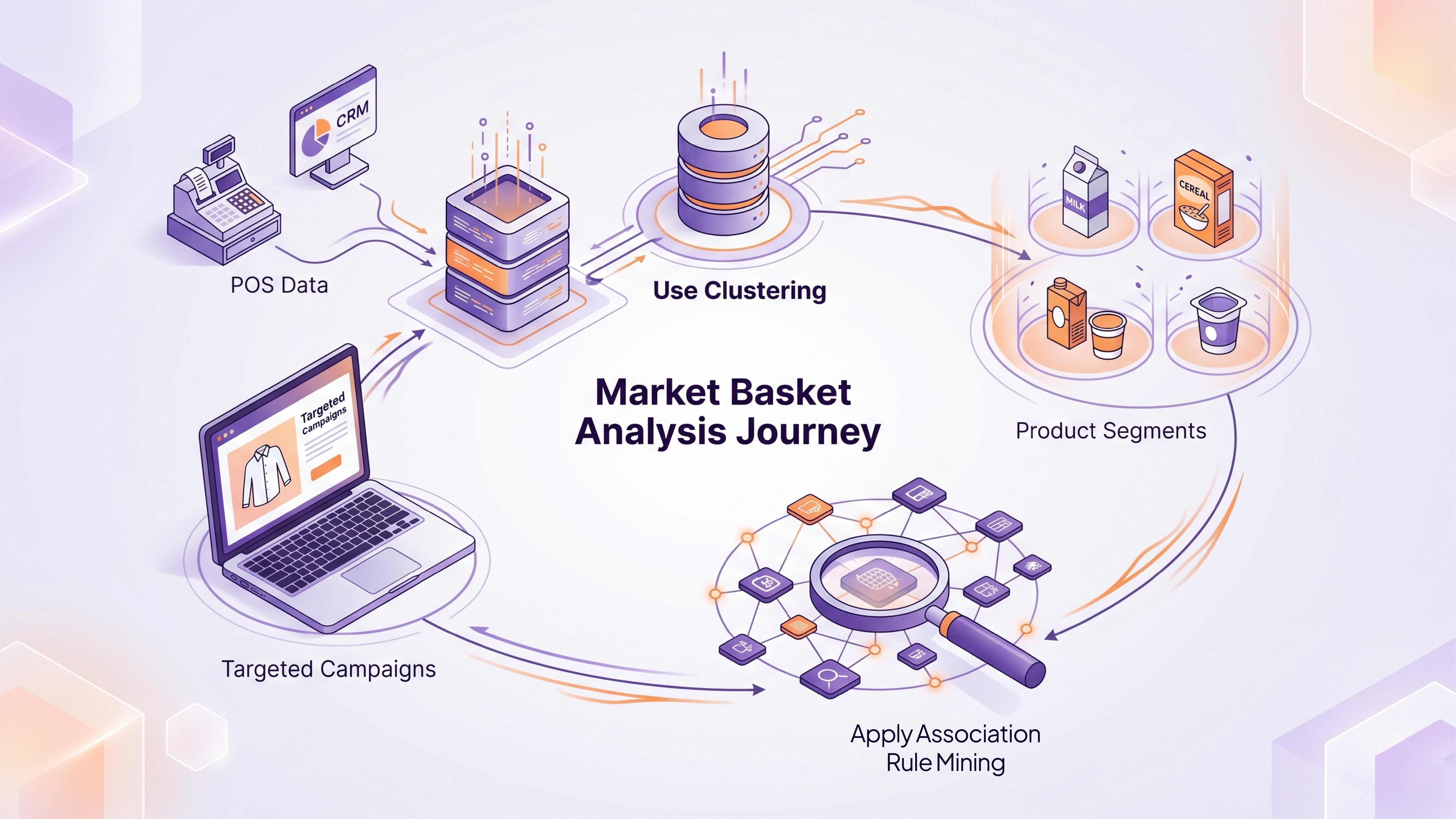
How Market Basket Analysis works – from POS data collection to targeted campaigns that drive cross-sell conversions.
The Market Basket Analysis Framework is a structured approach to identifying cross-selling opportunities. It involves collecting transaction data, using clustering and association rule mining techniques, and implementing findings to boost sales and customer loyalty. This framework can be broken down into several components:
1. Data Collection
Data collection is the first step. Retailers need to gather customer transaction data to identify patterns and opportunities for cross-selling.
- Collect transaction data from POS systems
- Use CRM platforms like eWards to track customer purchases
Tip: Ensure your CRM platform accurately captures customer transactions.
2. Data Analysis
Data analysis is the next step. Retailers need to use clustering and association rule mining techniques to segment products and identify cross-selling opportunities.
- Use clustering techniques to group similar products
- Use association rule mining to identify cross-selling opportunities
Tip: Use advanced analytics tools for data analysis and cross-selling opportunities.
3. Implementation
Implementation is the final step. Retailers need to segment products based on customer behavior and create targeted marketing campaigns.
- Segment products based on customer behavior
- Identify cross-selling opportunities and create targeted marketing campaigns
Tip: Use eWards to implement findings and create targeted marketing campaigns.
Before You Start
Before starting market basket analysis, retailers need to have the necessary data and tools in place. They should also have a clear understanding of their goals.
- Ensure you have the necessary data and tools
- Understand your goals and objectives
Tip: Use eWards to collect and analyze customer transaction data and identify cross-selling opportunities.
Step 1: Collect Customer Transaction Data
The first step is to collect customer transaction data. Retailers need to track customer purchases using POS systems and CRM platforms like eWards.
- Track customer purchases using POS systems
- Use CRM platforms like eWards to track customer purchases
Tip: Ensure your POS system and CRM platform are integrated to accurately capture customer transactions.
Step 2: Use Clustering Techniques to Group Similar Products
The next step is to group similar products together using clustering techniques. This involves analyzing transaction data to identify common purchase patterns among customers. For example, a grocery retailer might find that customers who buy cereal often also buy milk and yogurt. By grouping these products together, the retailer can better understand customer behavior and create effective cross-selling strategies. Clustering also helps in identifying product categories that are frequently purchased together, such as snack items and beverages, allowing for targeted promotions and discounts.
Step 3: Apply Association Rule Mining to Identify Cross-Selling Opportunities
Association rule mining is a technique that identifies rules in transactional data indicating which products are often bought together. This step is crucial for uncovering hidden cross-selling opportunities. For instance, a retail chain might find through association rule mining that customers who purchase smartphones often also buy screen protectors and cases. By identifying such rules, the retailer can create targeted marketing campaigns that offer these accessories at a discount when a smartphone is added to the cart, thereby increasing sales and customer satisfaction.
Step 4: Implement Findings to Enhance Sales and Customer Loyalty
Once the analysis is complete, the next step is to implement the findings. This involves segmenting products based on customer behavior and creating targeted marketing campaigns. For example, a clothing retailer might identify that customers who buy athletic wear often also purchase fitness trackers and water bottles. By segmenting these products and creating targeted promotions, the retailer can enhance customer loyalty and increase sales. Implementing these strategies can also help in reducing customer acquisition costs by focusing on existing customers and their purchasing patterns.
This structured approach ensures that retailers can effectively use market basket analysis to boost sales and customer loyalty, making it a valuable tool in the retail industry.