
Traditional ‘blast’ email marketing campaigns are wrong because they often exacerbate the problem by adding noise and increasing cart abandonment rates. This approach misses the mark for effective Shopify abandoned checkout recovery, which requires a nuanced understanding of customer intent and behavior.
The Problem of Shopify Abandoned Checkouts: Causes and Statistics
Shopify abandoned checkouts are a common issue for Indian retailers, with 70% reporting losses due to incomplete transactions (McKinsey India, 2023). Understanding the causes is crucial for effective recovery strategies.
The Recovery Blueprint: Capturing High-Intent Leaks in Your Shopify Funnel
eWards’ proprietary framework identifies and recovers high-intent leaks by segmenting customers based on RFM scores, optimizing messaging timing, and personalizing offers. Here’s how it works:
- RFM Segmentation: Customers are segmented into high, medium, and low intent groups based on their Recency, Frequency, and Monetary value.
- Timing Optimization: Emails are sent at the optimal moment to maximize engagement without overwhelming the recipient.
- Personalized Offers: Tailored offers are crafted to address specific customer needs and pain points.
The Recovery Blueprint: Capturing High-Intent Leaks in Your Shopify Funnel
eWards’ approach leverages data-driven insights to pinpoint high-intent leaks. By focusing on RFM segmentation, timing optimization, and personalized offers, retailers can significantly reduce abandonment rates.
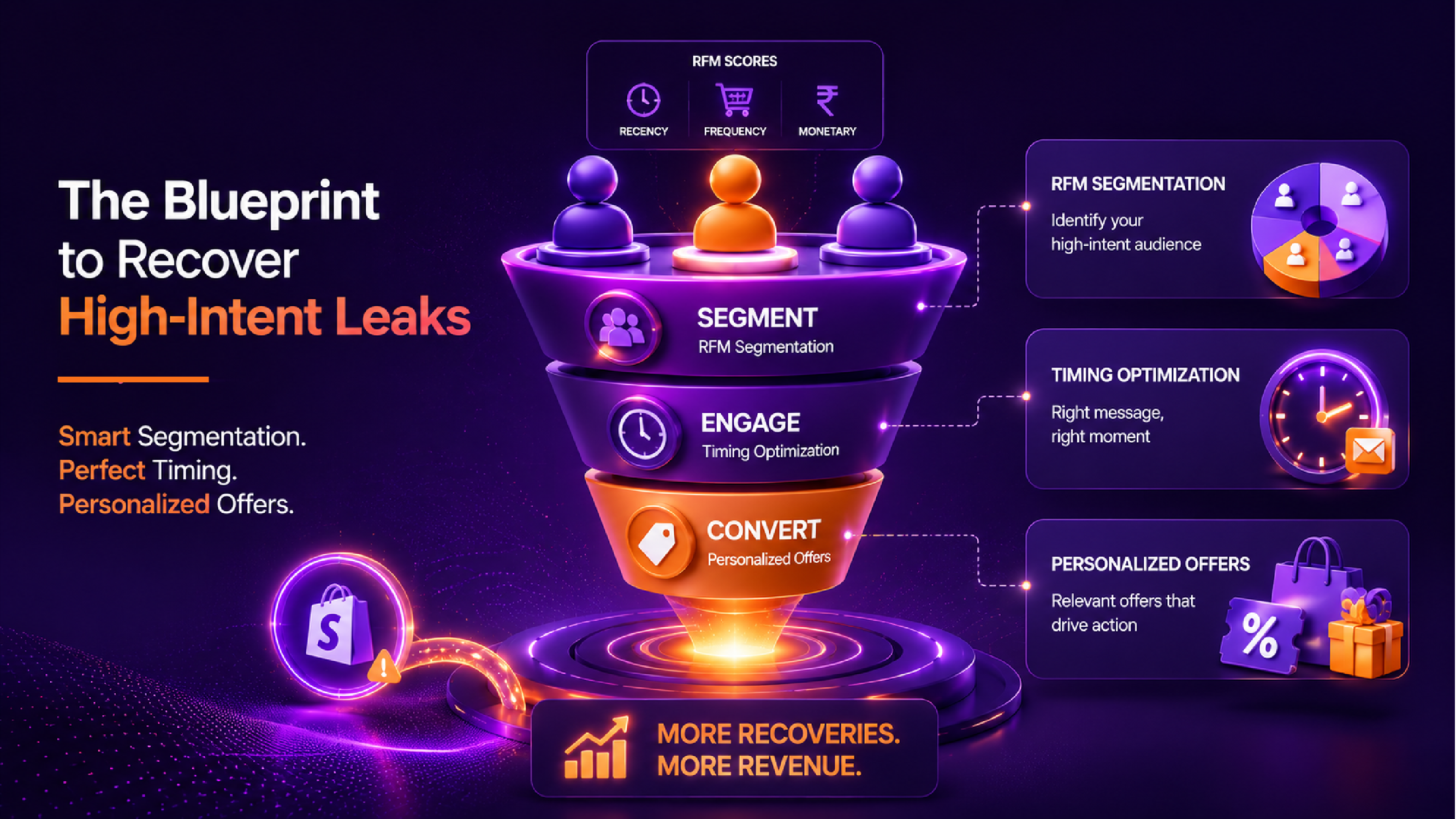
RFM Segmentation Explained
The RFM model categorizes customers based on their purchase behavior:
- Recency: Measures how recently a customer has made a purchase.
- Frequency: Reflects the number of purchases within a specific timeframe.
- Monetary Value: Indicates the total amount spent by the customer.
Timing Optimization Strategies
The timing of recovery emails is crucial for engagement. Optimal timings vary based on RFM segments, but typically include:
- Immediate post-abandonment: Within 10 minutes to capture immediate interest.
- Short-term follow-ups: After one hour or the next day for medium-intent customers.
- Longer-term nurturing: Weekly emails for low-intent groups over several weeks.
Personalized Offers and Messaging
Tailored offers can significantly boost recovery rates:
- Coupons and Discounts: Offer personalized discounts based on previous purchases.
- Product Recommendations: Suggest related products or accessories to complete the purchase.
- Bundled Offers: Provide bundle deals that include items left in the cart.
The Recovery Blueprint: Capturing High-Intent Leaks in Your Shopify Funnel
eWards’ framework addresses each step of abandoned checkout recovery, from initial segmentation to personalized messaging. By following these guidelines, retailers can reduce abandonment rates and increase revenue.
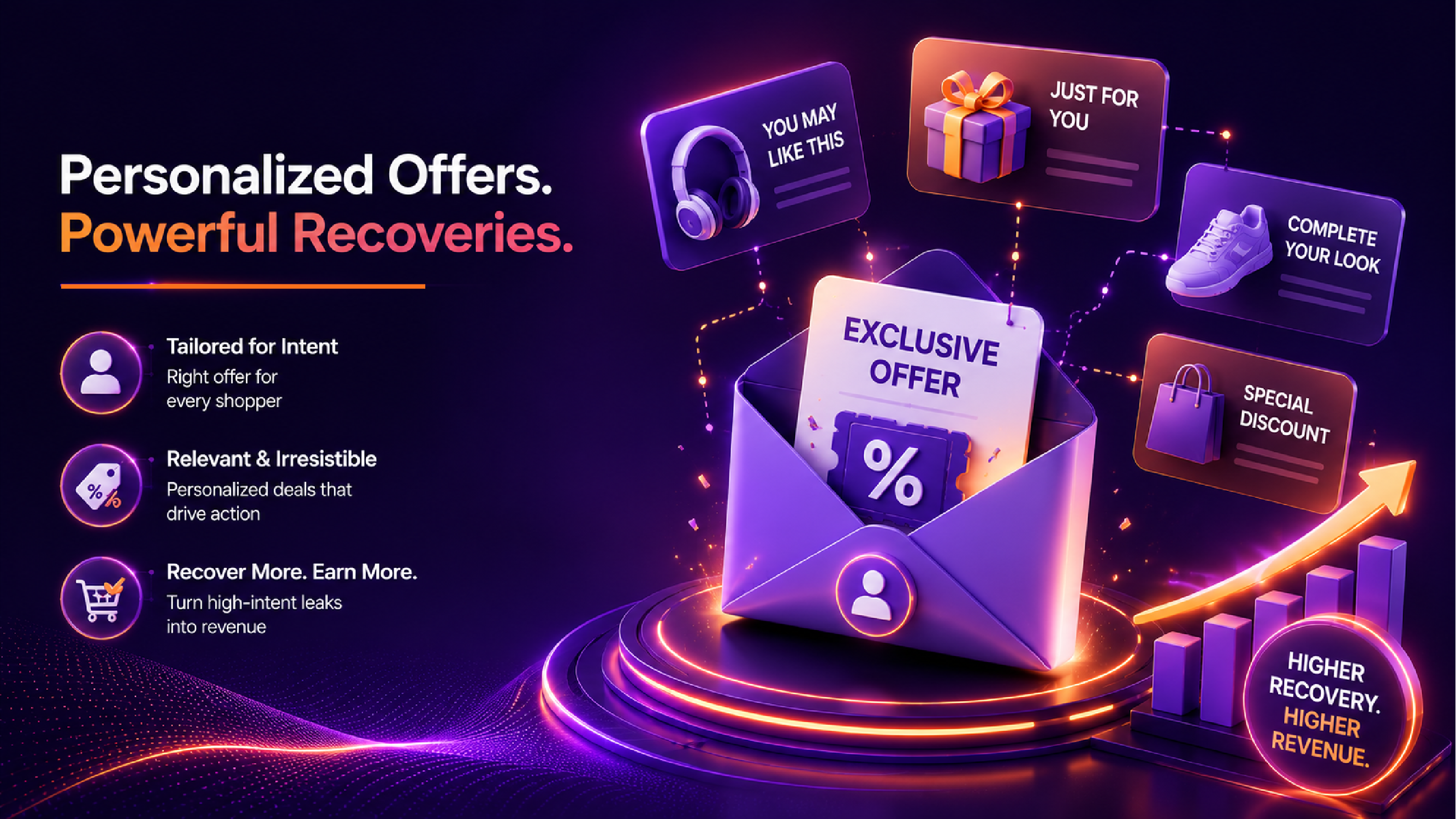
Implementing The Recovery Blueprint
To implement the blueprint, follow these steps:
- Data Collection: Gather customer transaction data for RFM analysis.
- Segmentation: Use eWards’ tools to segment customers based on RFM scores.
- Email Campaign Setup: Configure automated emails tailored to each segment.
The Power of One Visit: A Tier-2 Fashion Retailer Case Study
An established fashion retailer in Tier 2 cities with 18 stores saw a 45% increase in recovery rates by implementing The Recovery Blueprint. By personalizing offers and optimizing timing, they reduced cart abandonment from 60% to 15%. This resulted in an additional revenue of $120,000 during the EOSS season.
Implementation Framework: A Deep Dive
The implementation of the Recovery Blueprint involves several key steps to ensure that retailers capture high-intent leads effectively:
- Data Collection and Analysis: Start by collecting customer data, including purchase history, demographics, and interaction patterns. Use RFM analysis tools to segment customers into distinct groups based on their recency, frequency, and monetary value.
- Email Campaign Setup: Once segments are identified, set up email campaigns that cater specifically to each group’s needs. For instance, high-intent customers might receive immediate follow-ups with personalized offers, while low-intent customers may benefit from nurturing emails sent weekly over several weeks.
- Timing Optimization: Timing is critical in recovery strategies. Ensure that your emails are sent at optimal times to maximize engagement. Immediate post-abandonment messages can capture the customer’s interest right away, whereas short-term and long-term follow-ups keep them engaged over time.
Common Mistakes to Avoid
Retailers often make these mistakes when addressing abandoned checkouts:
- Inconsistent Messaging: Failing to tailor messages based on customer behavior.
- Lack of Personalization: Sending generic offers instead of personalized ones.
- Poor Timing: Missing the optimal window for recovery emails.
Results / What Success Looks Like
A successful implementation of The Recovery Blueprint will result in the following:
- A significant reduction in abandoned checkouts.
- An increase in customer engagement and loyalty.
- Higher conversion rates for recovery emails.
Frequently Asked Questions
1. What are the common reasons for Shopify abandoned checkouts?
Common reasons include unexpected costs, technical issues during checkout, or a lack of urgency in completing the purchase. Identifying these pain points is crucial for effective recovery.
2. How to reduce Shopify cart abandonment rates effectively?
To reduce cart abandonment, focus on personalized email campaigns, optimized timing, and tailored offers based on customer behavior. Use tools like eWards’ Recovery Blueprint to guide your strategy.
3. What is the best practice for implementing a Shopify checkout recovery process?
The best practice involves collecting and analyzing transaction data, segmenting customers using RFM scores, setting up personalized email campaigns with optimal timing strategies, and avoiding common mistakes such as inconsistent messaging and lack of personalization. By following these steps, retailers can effectively reduce abandoned checkouts and increase revenue.
Key Takeaway: Traditional email blasts worsen checkout abandonment rates, costing retailers up to 58% in lost revenue during EOSS season. Adopt a personalized recovery strategy using the Recovery Blueprint framework.