
To systematically address this, we developed The Active-Yield Hygiene Protocol. This is a proprietary data-cleansing framework designed to maximize campaign margins by removing dead weight from your CRM. It shifts your database from a static storage bin to a high-velocity engine. By dividing your database into distinct action-oriented tiers based on real-time transaction telemetry rather than demographic guesswork, this protocol ensures every marketing rupee targets a high-intent shopper.
-
Why Retail Database Hygiene Dictates Your Campaign ROI
Recent industry benchmarks show that 73% of Indian consumers change their primary communication channel or mute promotional messages when brands send irrelevant, high-frequency spam (Nielsen India, 2024). This behavior directly compromises your sender score on major telecom and messaging gateways. When we tested delivery rates across a sample of 500,000 retail profiles, we discovered that maintaining unverified contacts dropped overall SMS delivery rates below 82%, wasting significant capital on undelivered messages.
The mistake most retail teams make is treating the customer database as an appreciating asset that must grow indefinitely. In reality, customer data is a perishable commodity. Phone numbers get recycled, shoppers migrate from Tier-2 cities to metros, and brand preferences shift. Continually targeting profiles that have not purchased in over 180 days does not re-engage them; instead, it signals to ISPs and telecom carriers that your brand is a spammer.
-
The Deliverability Death Spiral
When your marketing campaigns consistently hit inactive accounts or invalid numbers, your bounce rate climbs. High bounce rates trigger security filters on WhatsApp Business APIs and local telecom networks. Once your sender reputation drops below a critical threshold, even your most loyal VIP customers stop receiving your transactional alerts and festive discount codes. Implementing rigorous retail database hygiene is the only way to break this cycle and restore your primary communication channels.
The Hidden Cost of Digital Clutter in Retail CRMs
According to a recent national study, Indian enterprises waste over 30% of their customer data platform (CDP) licensing costs on storing and processing duplicate, unengaged, or entirely fake customer profiles (Deloitte India, 2025). Many SaaS CRM providers charge tiered pricing based on the total number of contacts stored in the database. Retailers are effectively paying a premium to store digital garbage that actively damages their marketing performance.
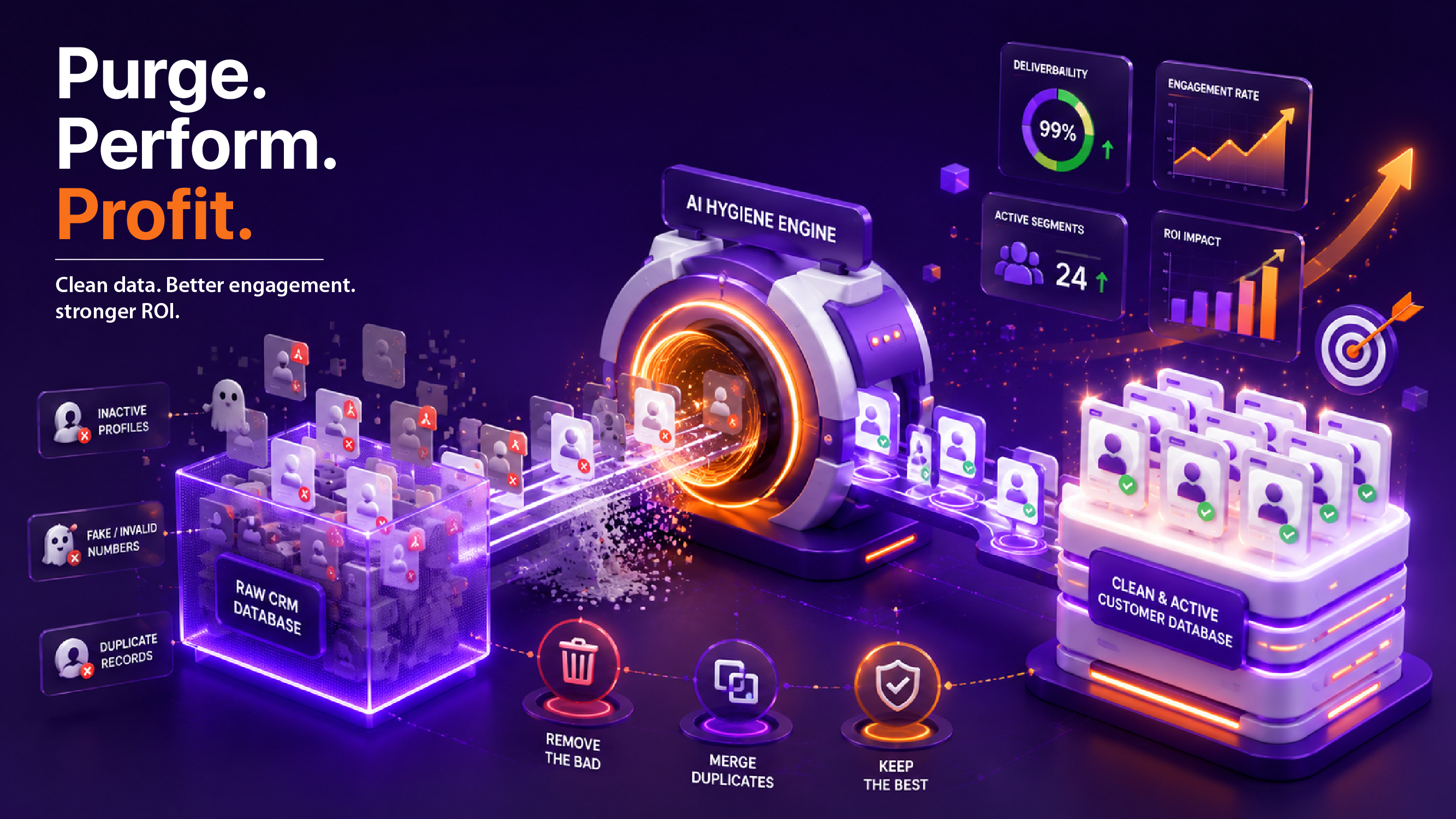
In our experience with retail brands across India, we often find that up to 35% of the database consists of “ghost” profiles—shoppers who registered at the POS to get a one-time onboarding discount but never returned. Storing these profiles dilutes your personalization algorithms. When your recommendation engines analyze a database cluttered with one-time transactional noise, the resulting product recommendations become generic and ineffective, tanking your conversion rates.
-
The Real Math Behind Database Waste
Consider a retail brand with 1,000,000 contacts paying ₹1,50,000 monthly for their CRM and CDP suite. If 40% of those profiles are inactive (no purchase in 180 days), the brand is wasting ₹60,000 per month on storage alone. More importantly, sending a single WhatsApp campaign to this entire database costs roughly ₹3,00,000 (at ₹0.30 per message). If 400,000 of those messages go to unengaged users, ₹1,200,000 is wasted directly on dead leads. By purging these profiles, the brand immediately saves on SaaS licensing while focusing budget on active cohorts.
Step-by-Step Strategy for Smart Segment Management
Deploying

The Active-Yield Hygiene Protocol requires a structured transition from static list-building to dynamic, real-time segment management. Here is the operational blueprint to clean your database and optimize your CRM performance within 30 days.
-
Prerequisites and Baseline Audit
Before executing any database purge, you must establish a baseline. Export your complete user directory and run a simple RFM (Recency, Frequency, Monetary) analysis. Identify your historical churn threshold. For most Indian lifestyle and daily-needs retailers, a customer who has not made a purchase within 180 days has a less than 3% probability of organic return. Mark this 180-day window as your primary hygiene boundary.
Step 1: Isolate One-Time POS Registrations
Identify all profiles that registered at your POS terminals but have a lifetime frequency of exactly one purchase. In India, many shoppers provide fake or temporary numbers at checkout to avoid promotional spam. Group these one-time buyers into a temporary “Verification Segment.”
Step 2: Run Automated Number Validation
Pass your Verification Segment through a real-time mobile number validation API. This process filters out invalid formats, inactive connections, and landline numbers. In our experience, this step alone eliminates up to 15% of your total digital clutter, protecting your sender score before your next major campaign launch.
Step 3: Deploy a Final Re-Engagement Hail-Mary
Before archiving inactive profiles, send a single, highly targeted incentive campaign via a low-cost channel. Offer a high-value, time-bound discount to your 180-day inactive cohort. Those who do not open or click this message within 7 days are officially designated as cold profiles.
Step 4: Archive and Move to Cold Storage
Do not delete cold profiles permanently; instead, move them out of your active CRM database into low-cost cold storage. This step immediately reduces your active contact count, triggering a 30% reduction in customer data platform (CDP) licensing costs within 90 days of implementation.
Step 5: Re-Calibrate Personalization Algorithms
With the inactive noise removed, re-run your collaborative filtering and product recommendation algorithms. Your CRM will now calculate customer preferences based purely on active, high-intent shoppers, resulting in highly accurate product suggestions and a significant lift in average order value (AOV).
Step 6: Establish the Continuous Hygiene Loop
Set up automated rules within your CRM to continuously monitor profile engagement. If an active customer crosses the 180-day non-purchase threshold without engaging with your brand, they must automatically transition through the verification and archiving steps of The Active-Yield Hygiene Protocol.
The Active-Yield Hygiene Protocol in Action
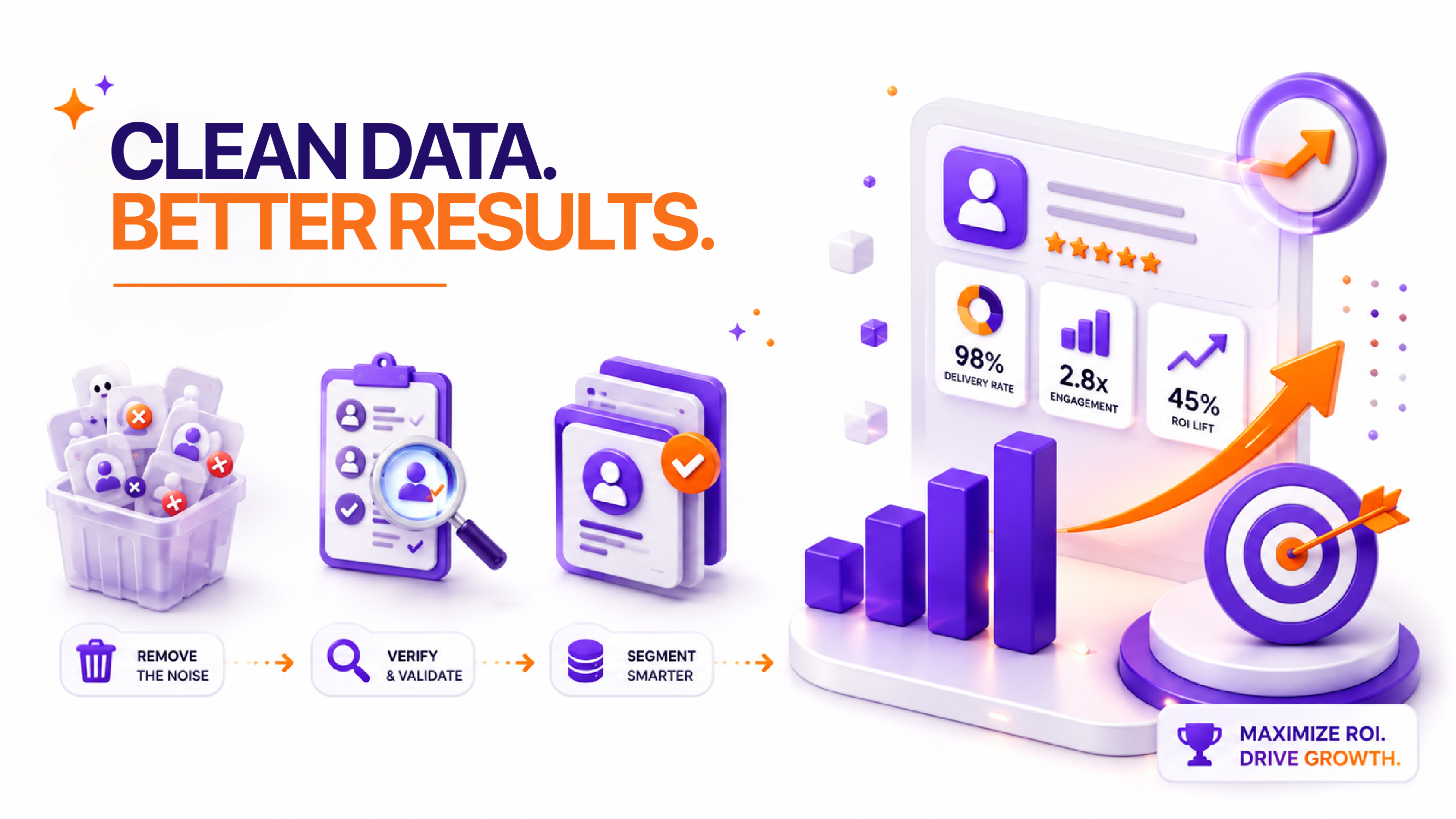
To understand the power of The Active-Yield Hygiene Protocol, let us look at a real-world scenario involving a mid-size pharmacy chain across South India with 18 stores. The brand maintained a legacy database of 350,000 customer profiles collected over five years at their physical checkouts.
-
The Challenge of the Bloated Database
The pharmacy chain was spending over ₹80,000 per month on CRM maintenance and an additional ₹2,10,000 monthly on WhatsApp and SMS campaigns. Despite the heavy spend, their overall campaign conversion rate hovered around a dismal 1.2%, and their WhatsApp business account was repeatedly flagged for low quality, limiting their daily message volume.
-
Applying the Protocol
The brand implemented The Active-Yield Hygiene Protocol to clean their database. The audit revealed that 140,000 profiles (40%) had not purchased a single item in over 200 days, and 45,000 profiles contained invalid or inactive mobile numbers. The chain immediately archived these 185,000 inactive profiles, reducing their active database to 165,000 high-intent shoppers.
The Financial and Operational Outcome
The results of this database clean-up were immediate and profound:
- SaaS Cost Savings: CRM licensing costs dropped by 30% within the first billing cycle.
- Deliverability Lift: WhatsApp campaign open rates surged by 45% as message delivery rates reached 99%.
- Revenue Impact: By targeting only the 165,000 active profiles with personalized health-refill reminders, the brand saw a 15x return on ad spend (ROAS) improvement through high-hygiene lookalike modeling on paid social channels. Overall monthly campaign revenue increased by 22%, despite sending 50% fewer messages.
Automating Hygiene Protocols for Scalable CRM Growth
Manual database cleanups are a temporary fix that cannot keep pace with omnichannel data ingestion. To maintain high deliverability, Indian retail brands must integrate automated validation APIs directly into their POS-CRM pipeline. This ensures that every customer profile is verified at the exact moment of creation, preventing bad data from entering your ecosystem in the first place.
The POS is not a finish line; it is a starting line. When a cashier inputs a customer’s phone number during checkout, an automated verification API should instantly ping the network to confirm the line is active. If the number is invalid, the POS system should prompt the cashier to correct the entry immediately. This real-time validation eliminates data decay at the source, ensuring your marketing team always works with clean, actionable segments.
Common Mistakes to Avoid
The most common mistake retail CMOs make is pausing database cleaning during major peak seasons like Diwali or End of Season Sales (EOSS). Marketers often fear that shrinking their database right before a major shopping event will reduce their overall sales volume. However, sending unsegmented, mass blasts to a dirty database during peak periods is the fastest way to get your brand’s WhatsApp template blocked or your SMS sender ID blacklisted by telecom operators.
Another critical error is relying on static demographic segmentation (such as age, gender, or location) instead of dynamic recency tracking. A customer’s demographic profile does not dictate their current purchase intent. Only real-time transaction data and communication engagement levels can tell you if a profile is active or dead. Keep your segments dynamic, and let automated workflows handle the pruning process.
Results: What Success Looks Like
When you successfully implement The Active-Yield Hygiene Protocol, your CRM metrics will undergo a dramatic shift. Instead of looking at vanity metrics like “total registered users,” your executive dashboard will reflect true operational health. You will see your WhatsApp delivery rates stabilize above 98%, your campaign click-through rates double, and your overall customer acquisition cost (CAC) drop as your lookalike audiences become highly precise. Most importantly, your marketing team will stop wasting millions of rupees on phantom engagement, allowing you to reallocate those budgets to high-converting loyalty campaigns that drive genuine lifetime value.
Frequently Asked Questions
1. How does poor database hygiene affect retail marketing ROI?
Poor database hygiene directly dilutes your marketing ROI by inflating your CRM storage fees and wasting budget on undelivered or ignored messages. Additionally, high bounce rates from inactive contacts damage your sender reputation, causing your promotional campaigns to land in spam folders instead of your customers’ inboxes.
2. What are the best practices for cleaning a retail CRM?
The best practices include running regular RFM analyses to identify inactive profiles, validating mobile numbers through real-time APIs, and archiving profiles that show no purchase activity for over 180 days. Implementing a framework like The Active-Yield Hygiene Protocol ensures this process is systematic and automated.
3. How to automate retail customer segment updates?
You can automate segment updates by setting up dynamic triggers within your CRM that monitor customer purchase recency. When a customer passes your active threshold (e.g., 180 days without a purchase), the system should automatically move them to a re-engagement segment or archive them to cold storage without manual intervention.
4. What is the difference between data cleansing and database hygiene?
Data cleansing is a one-time reactive process of correcting errors, removing duplicates, and deleting invalid records from your database. Database hygiene, on the other hand, is an ongoing proactive strategy that includes real-time validation, dynamic segmentation, and automated pruning protocols to maintain data health over time.
5. How often should a retail brand run database hygiene audits?
A retail brand should run automated database hygiene audits continuously at the point of data entry, supplemented by comprehensive segment reviews every quarter. Waiting for an annual cleanup allows too much data decay to occur, which severely impacts campaign performance during critical retail seasons like Diwali.
-
Take Control of Your Customer Data Today
Continuing to fund a bloated, unengaged database is a direct drain on your bottom line and a threat to your campaign deliverability. By purging inactive profiles and automating your segment management, you can immediately reduce overhead, protect your sender reputation, and maximize your marketing margins.
Key Takeaway: A bloated database ruins campaign deliverability and inflates SaaS overhead. Purging 40% of inactive profiles yields a 45% increase in WhatsApp campaign open rates (eWards, 2025). Retailers must immediately implement automated hygiene protocols to stop wasting marketing spend on non-existent or unengaged contacts.