
Most managers think auto‑replying saves time; it actually signals indifference, turning potential advocates into disengaged customers.
In Indian retail the moment a shopper types “I’m waiting for my order confirmation” and receives a generic bot reply, the emotional bridge built over a Diwali purchase begins to fray. The tension is clear: what feels like efficiency on the back‑office desk becomes a silent churn accelerator at the customer’s end.
The Human Connection Gap: Why generic auto‑replying fails in Indian retail
Answer: Because a one‑size‑fits‑all bot cannot speak the cultural nuances that Indian shoppers expect, it leaves them feeling unheard.
During the festive rush a tier‑2 fashion retailer’s WhatsApp inbox floods with queries about gift‑card balances. A bot replies “Your balance is X”, but the shopper had just asked “Can I combine this card with a coupon for Diwali?” The bot’s silence on the coupon part feels dismissive. The shopper switches to a competitor who offers a live chat that acknowledges the nuance. The gap isn’t technology; it’s the missing human cue that signals respect.
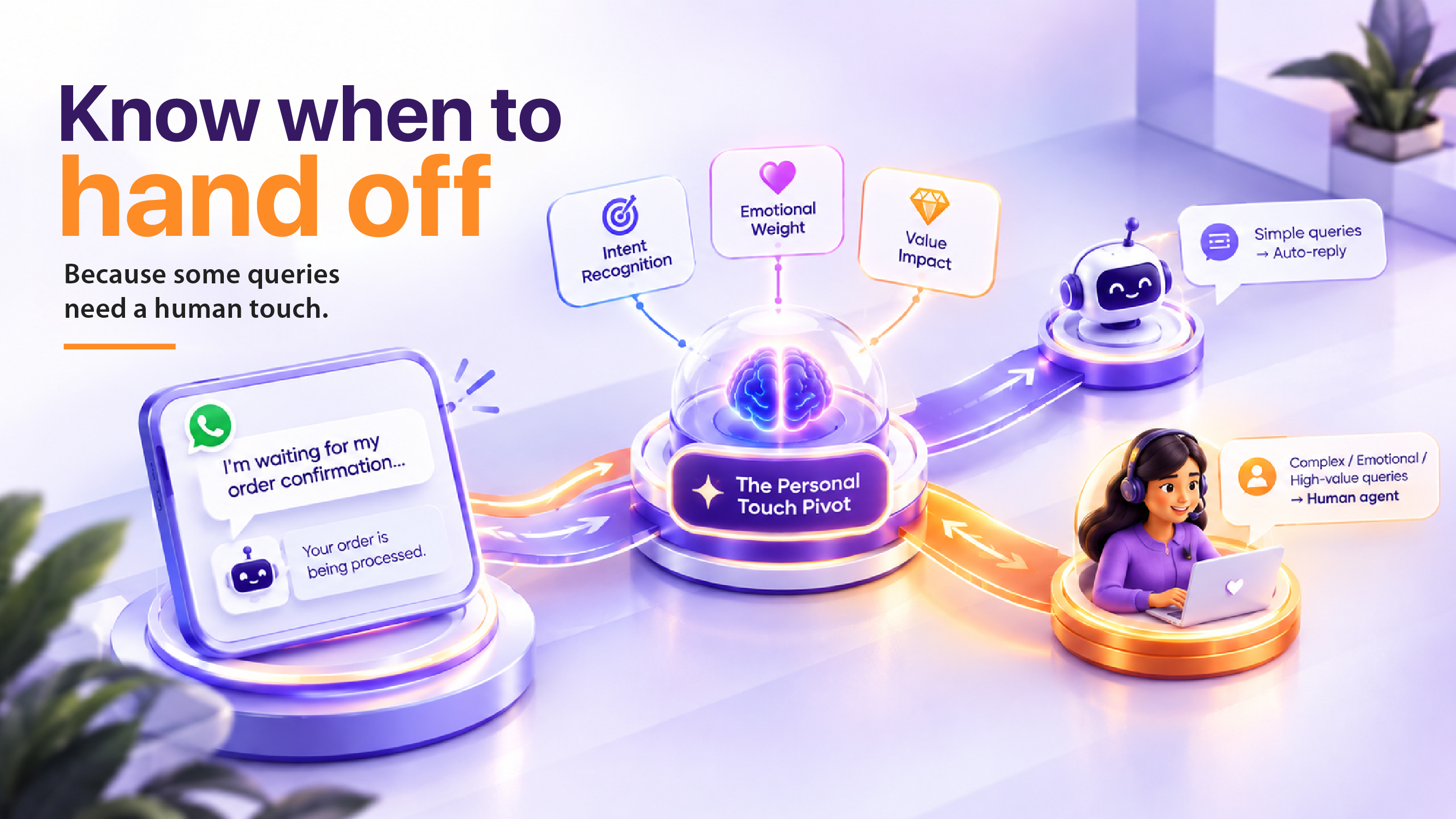
The Personal Touch Pivot defines three decision layers: Intent Recognition, Emotional Weight, and Value Impact. Each layer forces the system to ask “Does this query need a human voice?” before sending an auto‑reply.
- Intent Recognition
Identify whether the customer is asking for information, seeking resolution, or expressing sentiment. A query about a delayed delivery carries more weight than a simple store‑timing question.
- Emotional Weight
Detect language that hints at frustration or excitement. Words like “disappointed” or “excited” trigger a human hand‑off.
- Value Impact
Assess the potential revenue or loyalty impact. A high‑value order or a loyalty‑tier upgrade request warrants personal attention.
Apply the Pivot by configuring your CRM to route any query that hits two of the three layers to a live associate. The result is a inbox that feels personal, not robotic.
Action: Audit your current auto‑reply triggers against the three Pivot layers and re‑route any that meet two criteria to a human agent.
1. The Perceived Value Decline: Auto‑replying signals low service quality
Answer: Customers interpret generic replies as a sign that the brand does not value their time or loyalty.
Imagine a popular F&B chain receiving a WhatsApp message: “My order was missing the extra cheese I paid for.” The auto‑reply says “Your order is being processed.” The customer sees a mismatch between expectation and response, interpreting the brand as indifferent. In the next visit, the same customer orders a different outlet, believing the first one does not care about details.
When the brand’s loyalty program promises “personalized offers on your birthday,” but the birthday wish arrives via a generic template, the promise feels hollow. The perceived value of the loyalty program drops, and the churn risk rises.
The Personal Touch Pivot’s Emotional Weight layer catches these moments. By flagging sentiment‑laden words, the system escalates to a human who can apologize, offer a complimentary item, and reaffirm the brand’s commitment.
Action: Implement sentiment analysis on inbound messages and set a rule: any negative sentiment triggers a human response within two minutes.
2. Retention Cost of Automation: Over‑automation fuels churn and raises acquisition spend
Answer: When bots answer every query, the subtle loss of trust translates into higher long‑term acquisition costs.
A supermarket chain runs an omnichannel inbox that auto‑replies to every “Where is my discount coupon?” query with a static link. A shopper who repeatedly receives the same link begins to doubt the brand’s ability to honor promises. After a few weeks, the shopper stops using the loyalty card, and the chain must spend additional marketing budget to win back that customer.
Retention cost is not just the lost sale; it is the extra spend on campaigns to replace a churned shopper. The Personal Touch Pivot’s Value Impact layer quantifies this by tagging queries tied to high‑value loyalty tiers. Those queries bypass the bot, preserving the relationship and protecting acquisition spend.
Action: Tag all loyalty‑tier related queries and ensure they are handled by a human within the first contact.
3. The Better Approach: Integrating The Personal Touch Pivot into retail customer experience
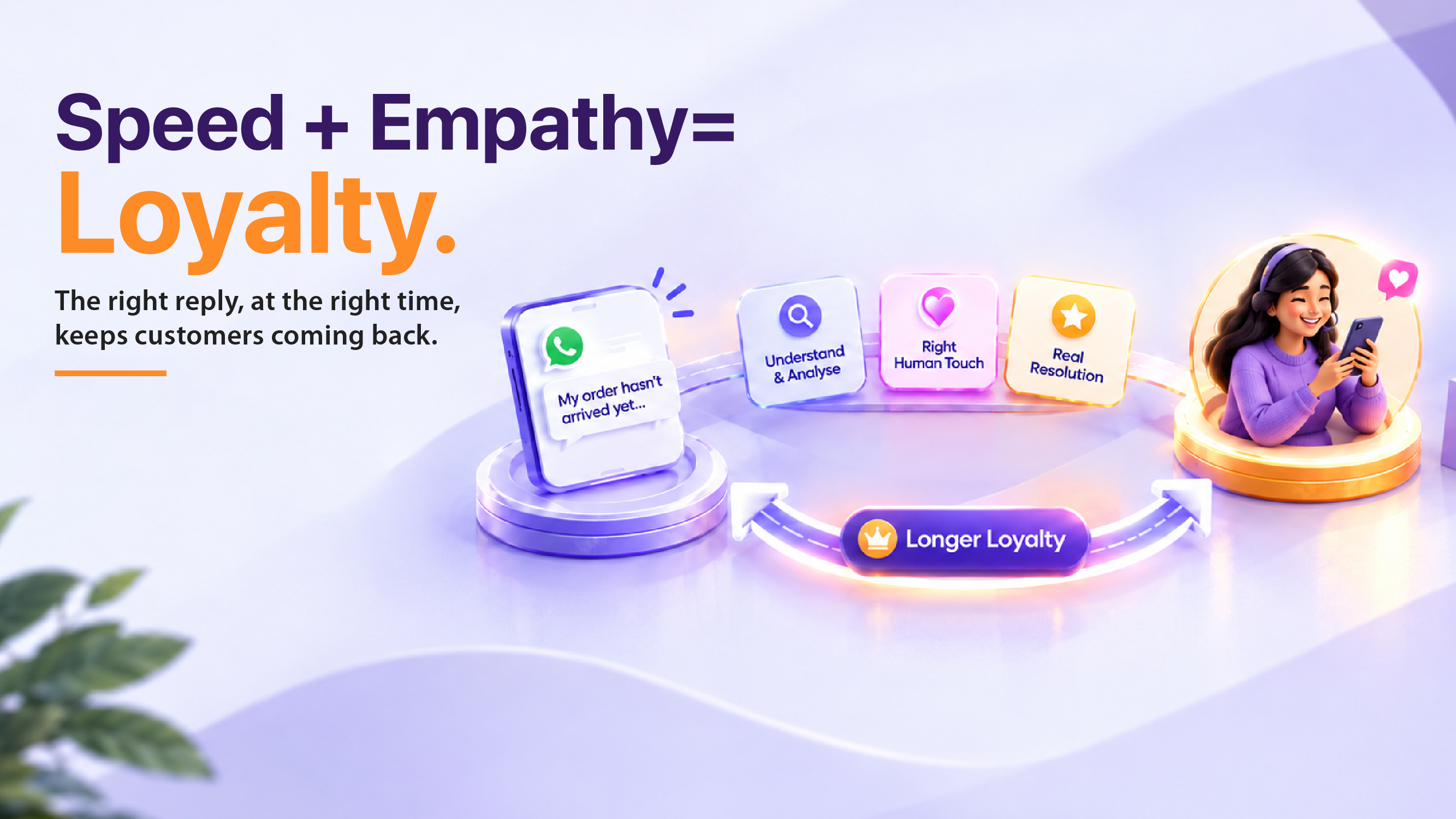
Answer: By embedding the Pivot into your CRM workflow, you balance efficiency with empathy, turning every interaction into a loyalty builder.
Step one: Map every inbound channel WhatsApp, Instagram DM, in‑store QR scans—into a unified inbox. Step two: Deploy the Pivot decision engine as a middleware that evaluates each message against Intent, Emotional Weight, and Value Impact. Step three: Route messages that meet the Pivot threshold to a live associate, while allowing low‑complexity queries to be auto‑replied.
This architecture keeps the speed of automation for routine tasks while ensuring that moments requiring empathy are handled by a human, preserving the delicate balance between scale and personal connection.
Real‑World Example: A Tier‑One Apparel Brand’s Holiday Campaign
During the lead‑up to the festive season, a well‑known apparel brand launched a “Buy One, Get One Free” promotion that was heavily promoted on social media. Customers began flooding the brand’s WhatsApp Business number with questions about eligibility, size availability, and delivery windows. The brand initially relied on a single auto‑reply that simply said “Thank you for reaching out. We will get back to you shortly.”
Within hours, shoppers expressed frustration in their follow‑up messages, using words like “confused” and “annoyed.” The brand’s support team noticed a spike in negative sentiment and quickly activated the Personal Touch Pivot. The middleware flagged the emotional weight and routed the conversations to live agents. Agents responded with personalized messages, clarified the promotion rules, and even offered a small surprise gift for the inconvenience.
The result was a noticeable shift in tone: customers who had been on the verge of abandoning the purchase re‑engaged, shared positive feedback on social platforms, and many completed the transaction. The brand’s post‑campaign analysis showed a higher conversion rate and a surge in repeat visits, demonstrating how a timely human touch can turn a potential churn scenario into a loyalty win.
Implementation Framework: Deploying The Personal Touch Pivot
To operationalize the Pivot across a retail organization, follow this structured framework:
- Discovery & Mapping: Conduct a workshop with cross‑functional teams (customer service, marketing, IT) to list every inbound touchpoint and categorize typical query types.
- Define Pivot Thresholds: For each channel, set clear criteria for Intent Recognition, Emotional Weight, and Value Impact. Decide whether two out of three layers, or a single high‑impact layer, triggers a human hand‑off.
- Technology Enablement: Integrate a natural‑language processing (NLP) engine capable of sentiment detection and intent classification into your existing CRM or help‑desk platform. Configure the middleware to evaluate messages in real time.
- Routing Logic: Build routing rules that direct flagged messages to the appropriate skill‑based queue (e.g., loyalty‑tier specialists, regional managers, product experts). Ensure SLA targets for human response (e.g., within two minutes for negative sentiment).
- Training & Playbooks: Equip agents with scripts that acknowledge the earlier auto‑reply, apologize for any inconvenience, and provide a concrete solution. Emphasize tone that reflects cultural empathy—using local greetings, festival references, and respectful language.
- Monitoring & Continuous Improvement: Set up dashboards that track auto‑reply bypass rates, sentiment trends, and conversion outcomes. Hold weekly reviews to fine‑tune Pivot thresholds and update the NLP model with new vernacular.
- Scale & Governance: As the system matures, expand the Pivot to additional channels (voice, email) and embed governance checks to prevent over‑automation in high‑value segments.
By following this framework, retailers can maintain the efficiency benefits of auto‑replying while safeguarding the human moments that drive customer loyalty, especially in a market where relationship depth is a competitive advantage.
Conclusion: Balancing Automation with Human Empathy
Auto‑replying, when applied indiscriminately, erodes the very foundation of retail customer experience—trust and personal connection. In the Indian context, where festivals, family gatherings, and regional nuances shape buying behavior, a cold bot can quickly become a churn catalyst. The Personal Touch Pivot offers a pragmatic path forward: it respects the need for speed while ensuring that every query with emotional weight, strategic intent, or high value receives a human voice.
Adopting this approach transforms auto‑replying from a blunt instrument into a smart filter, allowing brands to allocate human resources where they matter most. The payoff is clear: higher customer loyalty, stronger F&B brand communication, and more effective customer retention strategies that protect acquisition spend and fuel sustainable growth.
Frequently Asked Questions
1. How does auto‑replying to every customer query affect brand perception in a retail setting?
When a brand uses generic auto‑responses for every inquiry, shoppers feel that their unique concerns are being ignored. In a retail environment where personalized service is a key differentiator, this perception can shift a customer’s view from a trusted partner to a faceless corporation, eroding the emotional connection that fuels repeat visits.
2. What specific customer experience gaps arise when a retailer relies on auto‑replying?
Auto‑replying removes the opportunity to probe deeper into a shopper’s intent, missing cues that could lead to cross‑sell or up‑sell opportunities. It also eliminates the chance to acknowledge a customer’s frustration or excitement, leaving the interaction feeling transactional rather than relational, which can prompt the customer to seek more attentive service elsewhere.
3. Can auto‑replying harm loyalty during high‑traffic periods like holiday sales or new product launches?
During peak times, customers expect rapid, tailored assistance. Auto‑responses that fail to address the specific context of a holiday promotion or a limited‑edition release can leave shoppers feeling undervalued, causing them to abandon carts or switch brands that offer real-time, relevant guidance.
4. What alternatives should a retailer consider to maintain loyalty while managing high query volumes?
Investing in a tiered support system where common questions are answered by AI chatbots but more complex or emotional inquiries are escalated to live agents-ensures customers still receive personalized attention. Additionally, proactive outreach such as follow‑up emails after a purchase can reinforce the brand’s commitment to the customer’s journey.
5. How can a retailer measure the impact of abandoning auto‑replying on long‑term customer retention?
By tracking qualitative feedback from post‑interaction surveys and monitoring the tone of social media mentions, retailers can gauge shifts in perceived attentiveness. A noticeable increase in positive comments about personalized service typically correlates with stronger loyalty and higher repeat purchase rates.