
Stop losing customers to silence – pinpoint who’s gone quiet and bring them back before they shop elsewhere forever.
In CRM systems, advanced segmentation features that track a customer’s last visit day to their store help brands segment customers based on the date of their most recent store visit or transaction, enabling businesses to tap into recency-driven reactivation without complex manual analysis.
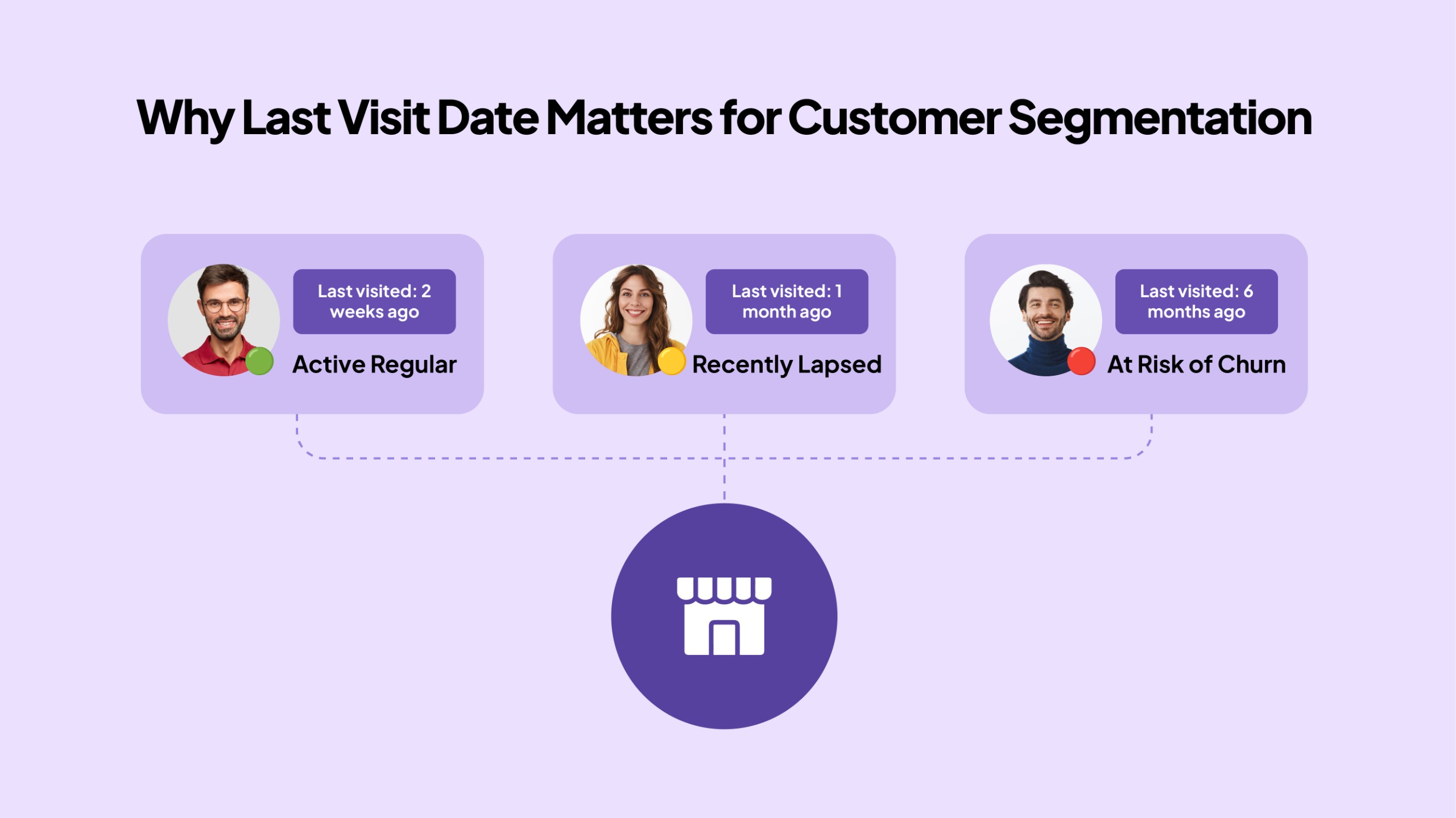
Why Last Visit Date Matters for Customer Segmentation
The last visit date captures when a customer last engaged with your brand, serving as the critical recency indicator for their current relationship status. By filtering segments around this date, you gain clarity on customer activity – whether they’re active regulars, recently lapsed, or at-risk for churn.
This approach yields benefits like improved reactivation rates through timely re-engagement, higher retention by preventing silent attrition, and efficient resource allocation by prioritizing customers most likely to respond. For business owners and marketing managers, it shifts focus from static lists to dynamically relevant groups, driving personalized communications that rekindle relationships.
Target Audience and Key Use Cases for This Segmentation
Who is this targeting?
This parameter is designed to segment lapsed or at-risk customers based on how recently they visited your store or made a purchase.
- Win-Back Campaigns: Target customers who haven’t visited in 30-90 days with personalized “We’ve missed you” offers.
- Reactivation Journeys: Segment 90-180 day lapsed visitors for escalating discount ladders to bring them back.
- Churn Prevention: Identify 180+ day silent customers for high-value re-engagement or loyalty point multipliers.
- Performance Analysis: Track reactivation success rates by recency cohorts (30-day vs. 90-day lapsed).
Building Powerful Segments Through Combination With Other Parameters
Last visit date can be paired with high-impact CRM filters commonly used by top retail brands. Some of these filters can include:
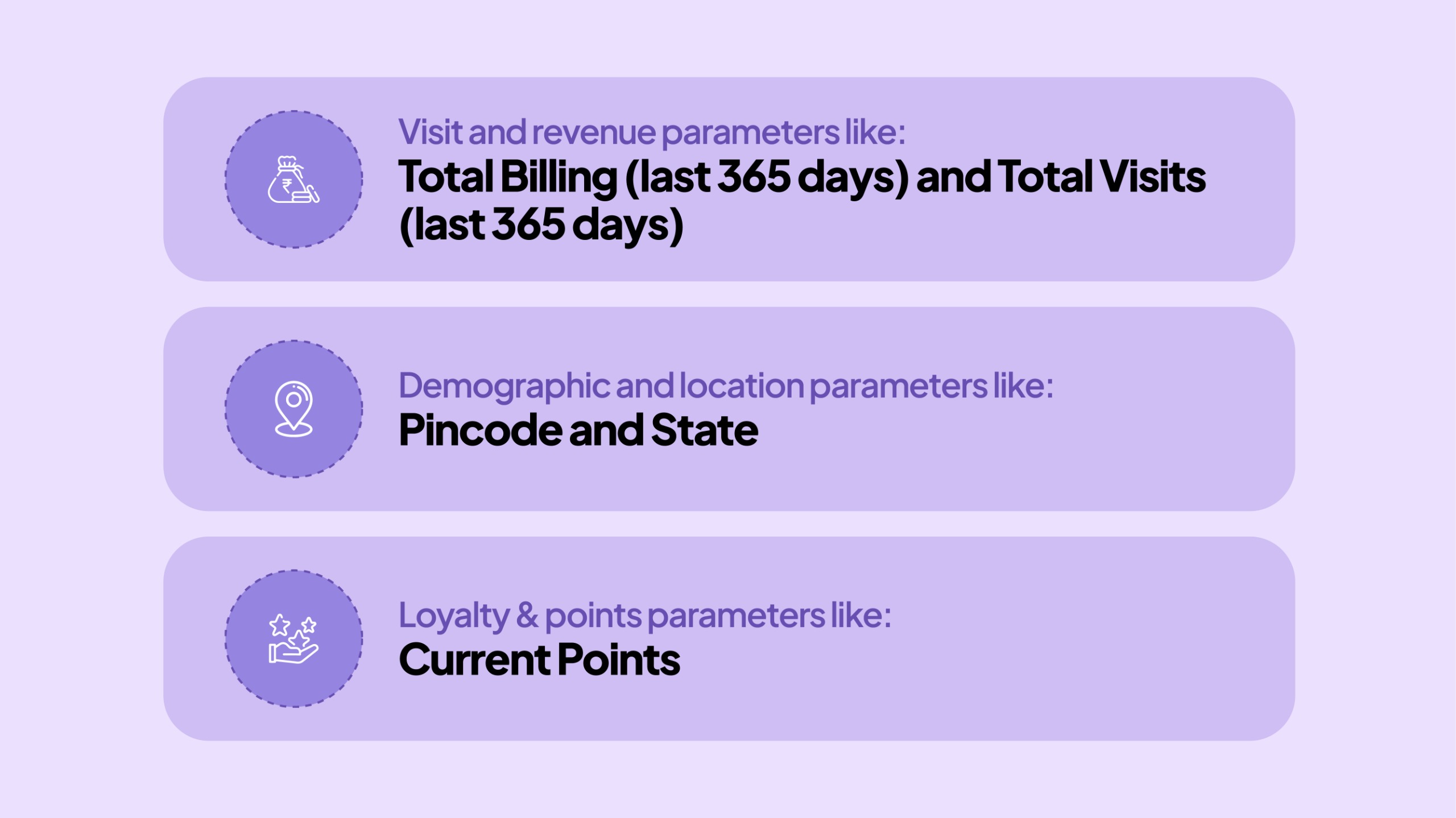
- Visit and revenue parameters like
- Demographic and location parameters
- Loyalty & points parameters
These combinations demonstrate how the last visit date parameter acts as a recency anchor, enhancing the precision of other metrics for actionable win-back insights.
In CRM systems, leveraging last visit date empowers CRM managers to systematically reactivate lapsed customers, fostering data-driven decisions that align marketing efforts with real customer recency signals.