
Loyalty programs are no longer just an add-on; they’ve become an essential part of customer retention strategies. However, behind every loyalty point and reward, there’s a fine balance that businesses must manage: point liability and retention. Getting this balance right can significantly impact your long-term profitability.
In this article, we will dive into the “math” of loyalty programs, explore how point liability can become a burden if not managed carefully, and discuss how customer retention can provide a higher ROI. By the end, you’ll have a better understanding of how to reduce liabilities while driving customer loyalty and increasing your profits
What is Point Liability?
Understanding Point Liability in Loyalty Programs
Point liability refers to the total value of loyalty points your business owes to customers, which haven’t been redeemed yet. In simpler terms, it’s like a “debt” on your balance sheet. As customers accumulate points, your business is obligated to honor those points when redeemed for discounts, rewards, or free products. This liability can grow, especially if points have no expiration or are rarely redeemed.
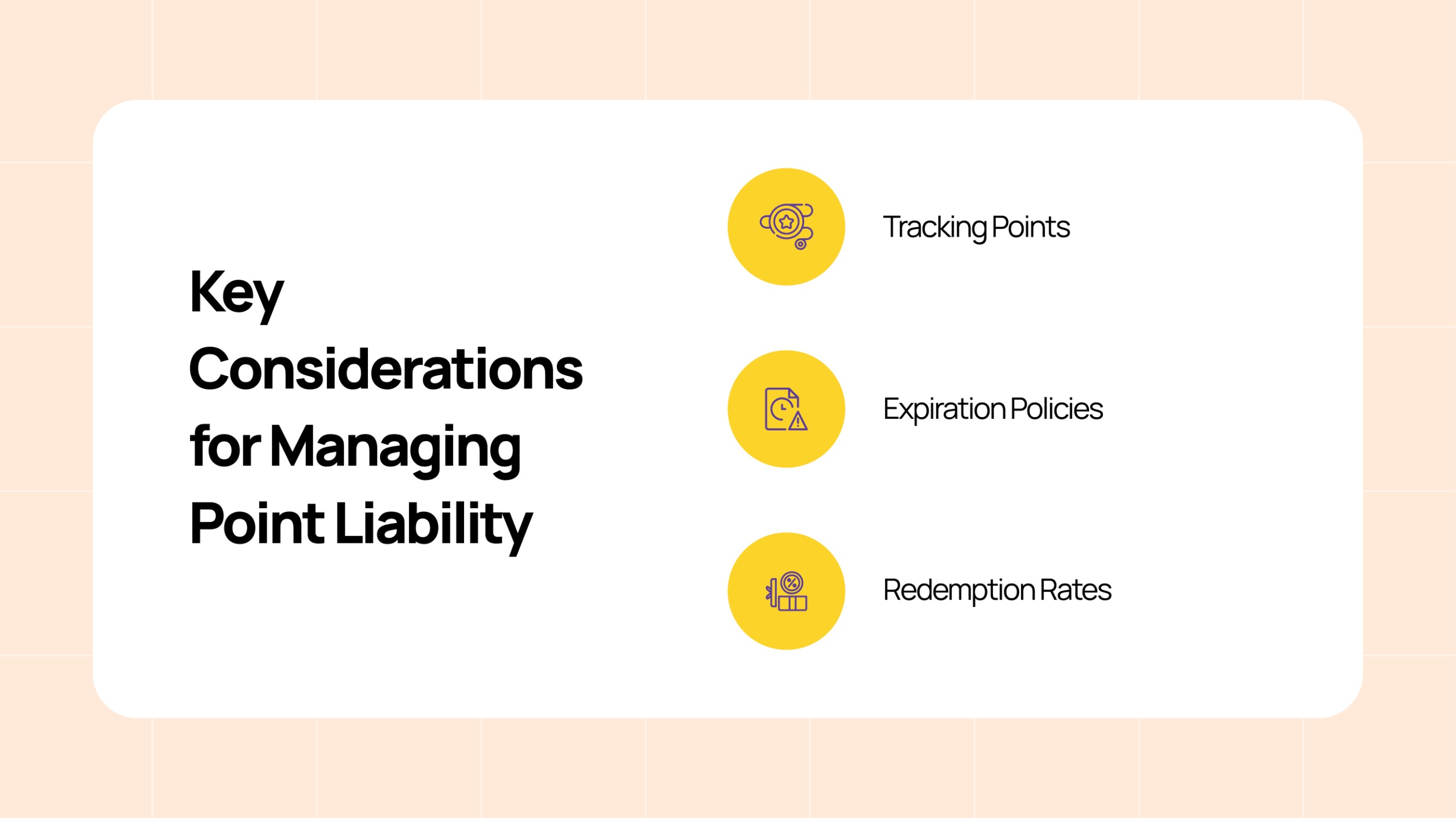
Key Considerations for Managing Point Liability:
- Tracking Points: Ensure you have a solid system in place for tracking issued points and outstanding liabilities.
- Expiration Policies: Consider implementing expiration dates for points, but do so carefully to avoid alienating customers.
- Redemption Rates: Regularly analyze redemption rates. Low redemption could mean your rewards aren’t appealing enough, or you may be overestimating the liability of points.
Why Point Liability Can Be Dangerous
If point liability isn’t controlled effectively, it can lead to a cash flow issue. This is especially true for retail or eCommerce businesses where rewards may eventually be exchanged for discounts, free products, or other valuable offerings. Unused points sitting on your balance sheet are like unclaimed money, and the longer you wait, the more you risk future financial strain.
Why Retention Is More Valuable Than You Think
How Retention Drives Profits and Reduces Acquisition Costs
While point liability represents an immediate “debt” on your business, customer retention is a long-term investment that delivers ongoing value. Retaining customers leads to repeat purchases, higher lifetime value (LTV), and reduces customer acquisition costs (CAC).
The Compounding Benefits of Customer Retention
Customer retention is one of the most powerful levers for growth. Studies show that increasing retention by just 5% can increase profits by 95%. Retained customers already trust your brand, and each subsequent purchase costs significantly less than acquiring a new customer. Here’s why retention is the key to profitability:
- Higher Frequency of Purchases: Retained customers are more likely to make repeat purchases. You don’t need to constantly invest in attracting new customers.
- Increased Lifetime Value (LTV): The longer a customer stays loyal, the more valuable they become. LTV grows exponentially as the customer continues purchasing from your brand.
- Lower CAC: Once you have secured a loyal customer, your CAC decreases because you are spending less on acquiring new customers.
Retention Isn’t Just About Getting Customers to Buy Again
Retention is about engagement but it is about keeping your customers excited, offering personalized experiences, and showing them that they are valued. This is where loyalty points come in, as they create a sense of value, encouraging customers to engage with your brand again and again.
Balancing Point Liability With Retention
How to Manage Point Liability and Maximize Retention
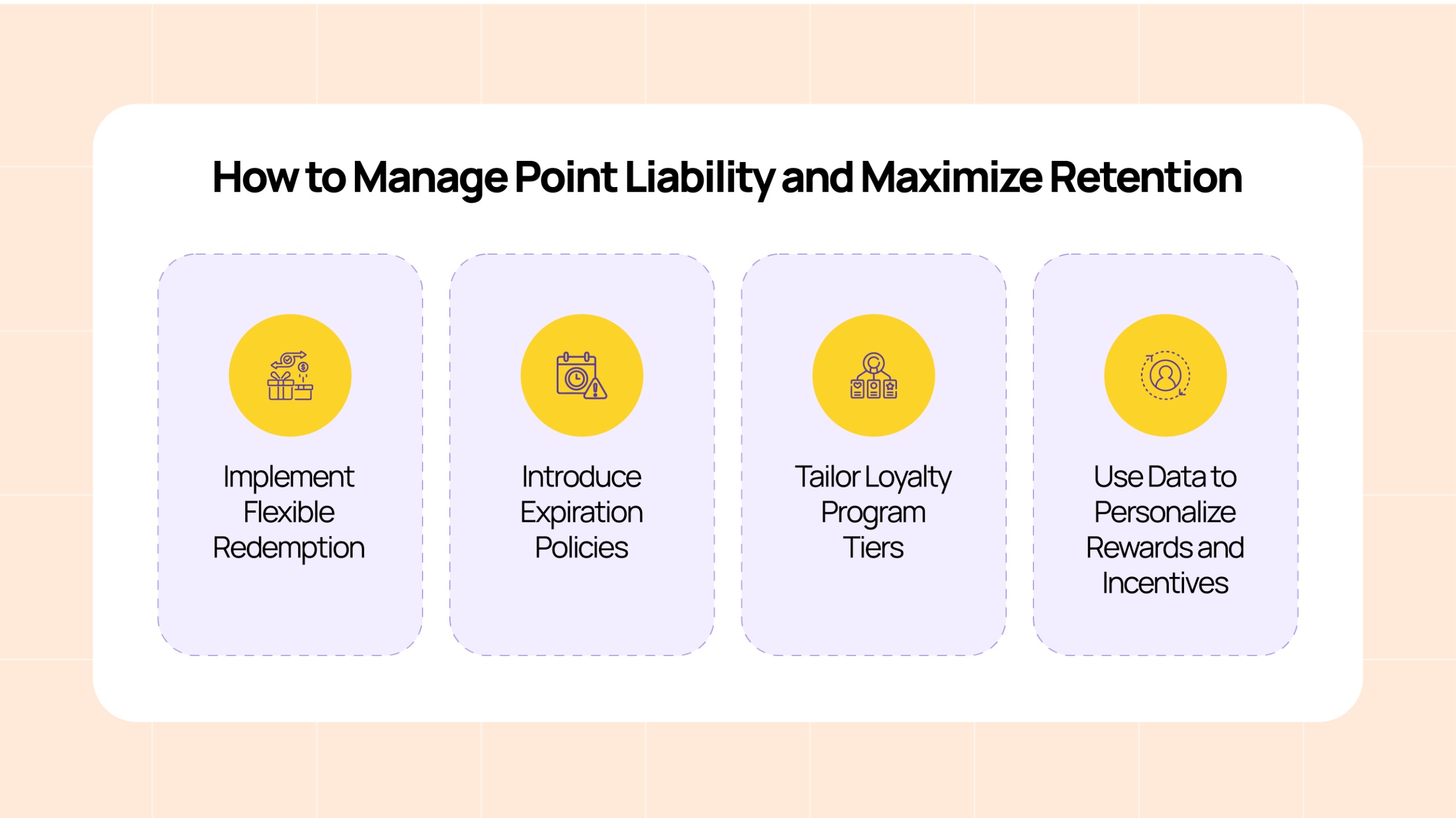
To create a loyalty program that drives long-term success, it’s crucial to balance point liability with retention. Here’s how you can achieve that:
1. Implement Flexible Redemption Options
If point liability is growing too high, give customers more redemption options. Instead of only offering free products, offer discounts, exclusive access to services, or VIP experiences. Flexibility in redemption makes it more likely that customers will redeem points, which reduces the liability buildup and encourages regular engagement.
2. Introduce Expiration Policies
While some customers may resist expiration dates, introducing expiration policies can help reduce long-term point liability. Make sure the expiration date is clearly communicated to customers, giving them ample time to redeem their points. However, balance is key: avoid being too strict, as it might alienate customers. Consider offering bonuses for early redemptions or reminders before expiration.
3. Tailor Loyalty Program Tiers
Create tiered loyalty programs where customers are rewarded for continued engagement. As customers advance through tiers, they earn more valuable rewards. This not only encourages them to stay loyal but also ensures that higher-tier members feel more invested in the program, thereby increasing their LTV.
Tiered rewards systems help manage point liability over time, while simultaneously boosting retention by creating a sense of exclusivity and progress.
4. Use Data to Personalize Rewards and Incentives
Use customer segmentation and behavioral data to personalize rewards. Tailoring your loyalty program to suit specific preferences and purchase behaviors increases the likelihood of customers redeeming their points. For example, if a customer regularly buys skincare products, offer them a discount on complementary products (like moisturizers or serums) to encourage point redemption and improve retention.
Example: Balancing Point Liability and Retention
Consider a retail company with a points-based loyalty program. Customers earn 1 point for every ₹82 spent, and for every 1,000 points, they can redeem a ₹820 gift card. Over time, the company accumulates a significant liability as customers earn points but fail to redeem them.
To manage this, the company introduces tiered redemption options. Customers can now redeem points for smaller rewards, such as discounts on future purchases, exclusive product access, or VIP experiences. Additionally, they introduce a 6-month expiration policy for points, incentivizing customers to redeem them sooner.
As a result, the company notices a decrease in point liability and an increase in customer retention, as customers feel more inclined to redeem their points regularly and stay engaged with the brand.
Mastering Loyalty Math for Better Business Outcomes
In the world of loyalty programs, understanding the balance between point liability and retention is crucial for long-term success. While points can create a liability for your business, a well-structured loyalty program that emphasizes retention can turn that liability into a tool for growth.
By effectively managing point liability through expiration policies, flexible redemption options, and personalized rewards, you can reduce financial strain while simultaneously driving higher retention and increasing customer lifetime value. The more your customers feel valued, the more likely they are to remain loyal, and ultimately return to your brand time and time again.
If your loyalty program isn’t delivering the results you expect, it may be time to rethink your approach. Leverage the math of loyalty to create a more sustainable, profitable model. Start optimizing your loyalty program today and see how balancing point liability with customer retention can help you grow.