
India’s Digital Personal Data Protection (DPDP) Act 2025 marks a fundamental shift in how retail and F&B brands manage customer relationships. While the legal framework has already been discussed, the real challenge (and opportunity) lies inside your CRM systems, loyalty programs, and personalisation strategies.
For brands that rely heavily on customer data to drive repeat visits, offers, and engagement, DPDP is about doing better, cleaner, and more trusted data-led marketing.
This article focuses on what Retail & F&B brands must change operationally to stay compliant while continuing to grow.
1. CRM Can No Longer Be a Data Repository, It Must Become Consent-Driven
Traditionally, CRMs have acted as central storage systems, collecting every possible data point “just in case” it becomes useful later. Under DPDP, this approach no longer works.
CRM systems must now be designed around:
- Purpose limitation (why the data exists)
- Consent status (what the customer has agreed to)
- Data lifecycle visibility (how long the data is retained)
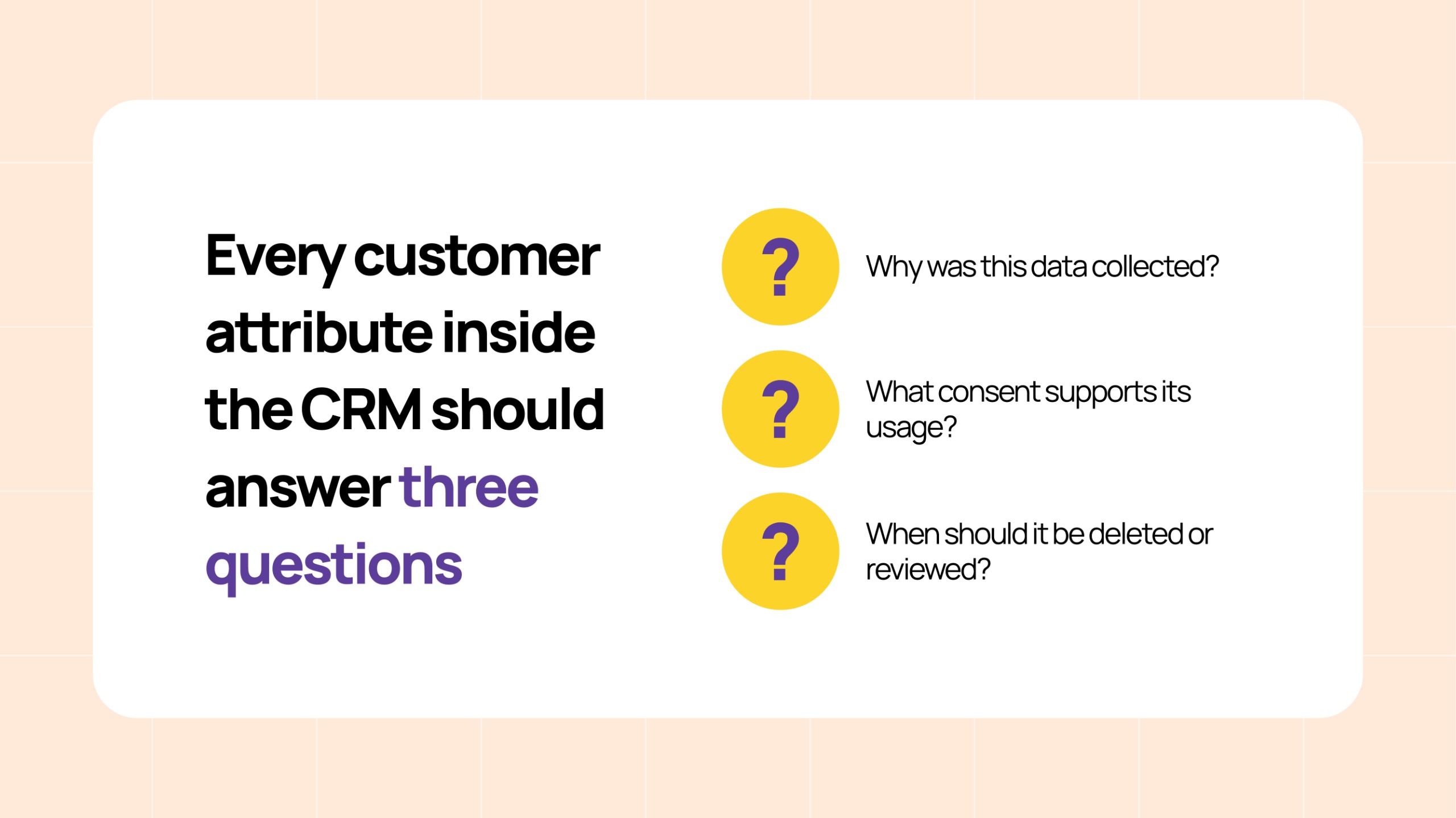
This shift forces brands to clean up bloated databases and focus on high-intent, high-quality data rather than volume.
2. Loyalty Programs Need Structural Redesign, Not Cosmetic Fixes
Loyalty programs are one of the biggest data collection engines for Retail and F&B brands and also one of the biggest risk areas under DPDP.
Moving forward, loyalty programs must:
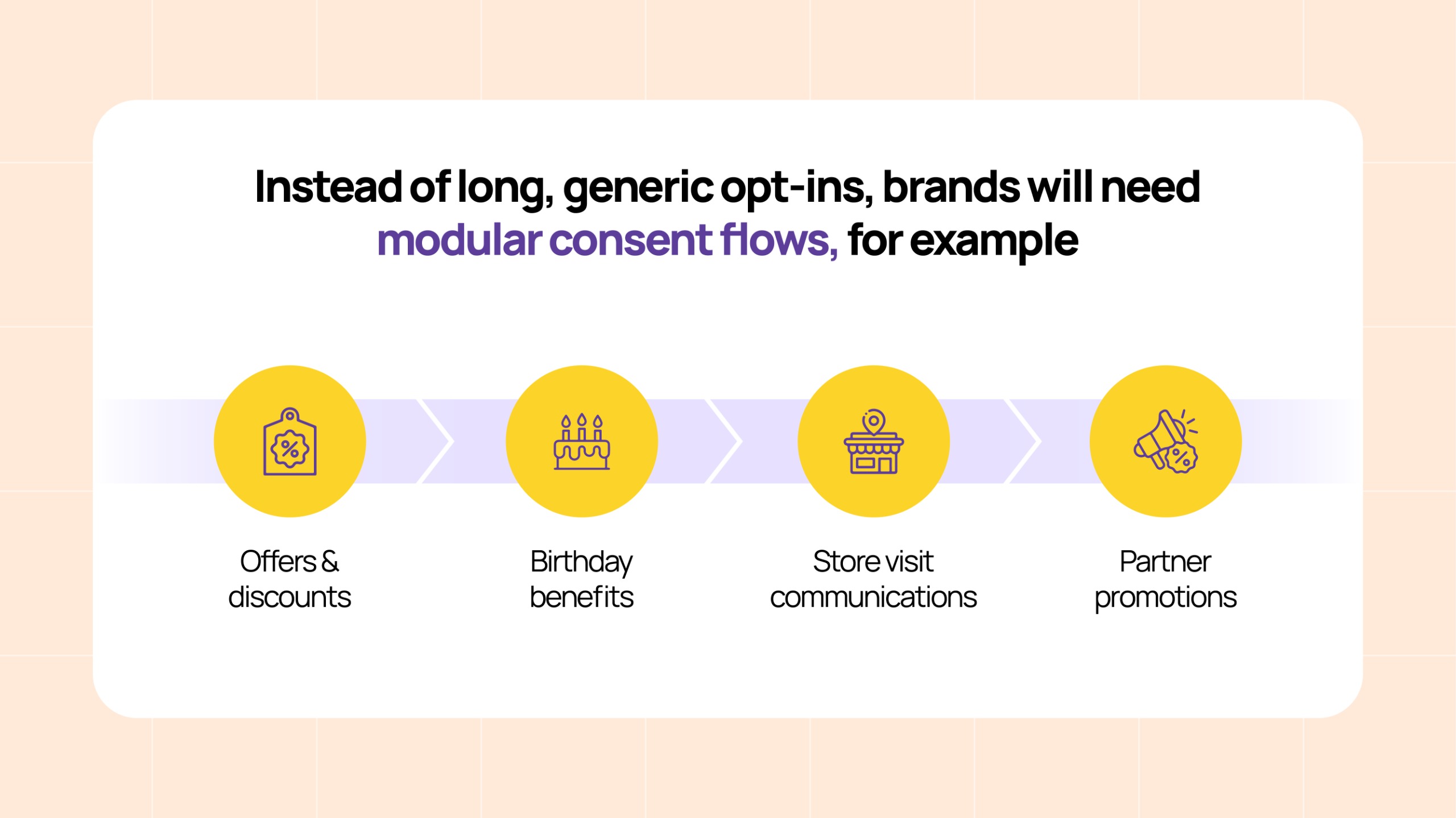
- Capture itemised, explicit consent
- Clearly state how each data point will be used
- Allow customers to easily modify or withdraw consent
- Use data strictly for the purpose promised
The result? Customers who participate in loyalty programs do so with confidence, leading to higher engagement and lower drop-offs, even if the total data collected is less.
3. Personalisation Will Become Smarter Not Smaller
A common fear around DPDP is that stricter rules will limit personalisation. In reality, the opposite is true.
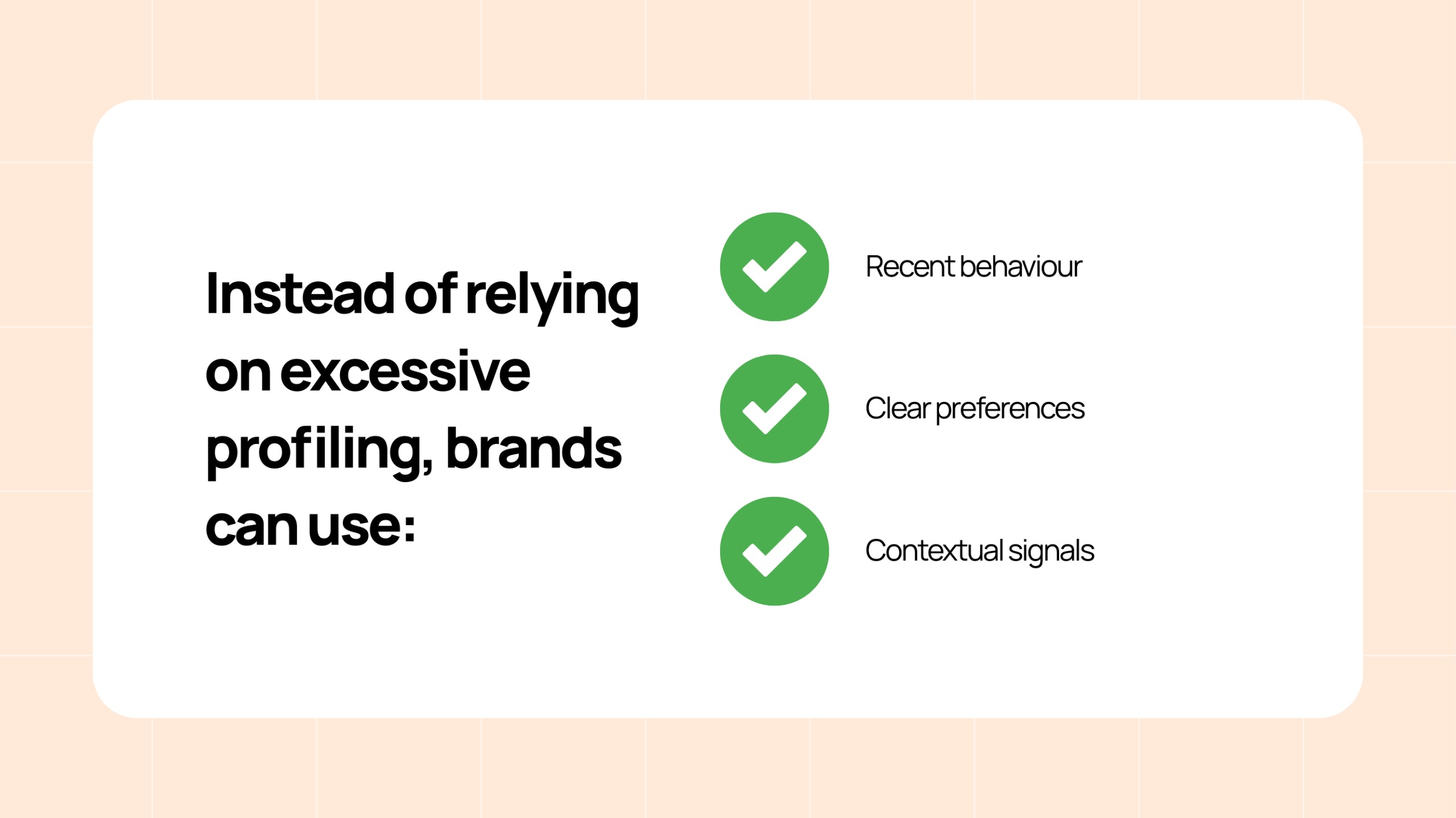
When data is:
- Consent-led
- Purpose-specific
- Clean and current
Personalisation becomes more relevant and effective. Retail & F&B brands will shift from broad, assumption-based campaigns to precise, trust-driven interactions.
This leads to fewer campaigns, but higher open rates, better conversions, and stronger customer relationships.
4. Omnichannel Data Needs Centralised Governance
Customer data today flows through multiple touchpoints – POS systems, mobile apps, websites, delivery platforms, kiosks, and social channels. DPDP requires brands to manage this data consistently and securely across all channels.
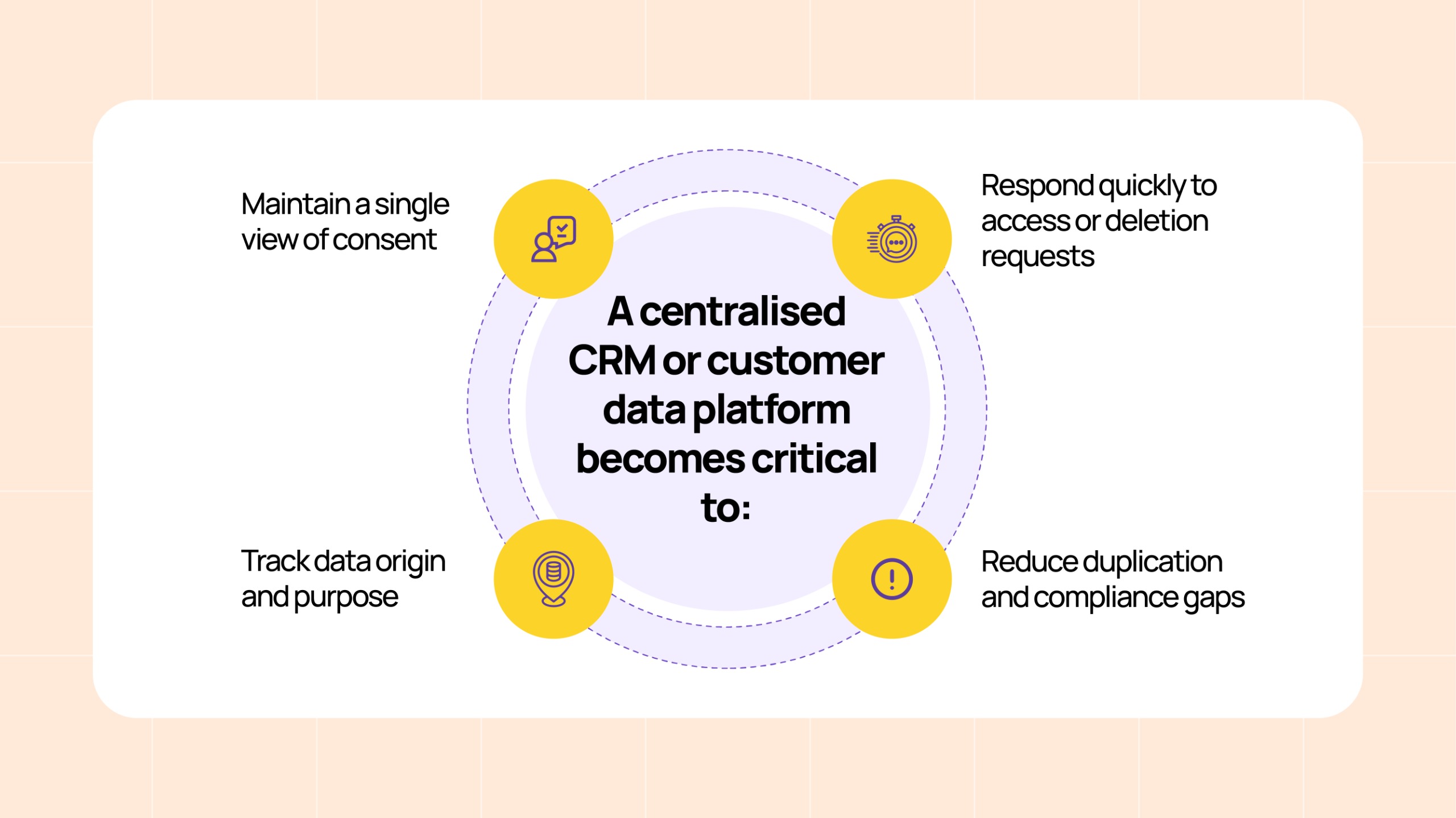
Without central governance, brands risk fragmented data practices that are difficult to audit and harder to defend.
5. Operational Readiness Is Now a Competitive Advantage
DPDP compliance is not a one-time exercise, it requires continuous operational readiness. Retail & F&B teams should focus on:
- Regular CRM and data audits
- Clear internal ownership of data governance
- Training frontline and marketing teams on consent-first practices
- Aligning marketing, IT, and legal teams around shared workflows
Brands that embed privacy into daily operations will move faster, respond better to customer requests, and avoid last-minute compliance chaos.
6. From Compliance to Growth: Why Privacy-First Brands Will Win
DPDP pushes brands to rethink how trust is built and sustained. Customers are increasingly aware of how their data is used and they reward brands that are transparent, respectful, and accountable.

For retail and F&B brands, DPDP is about building stronger, more sustainable customer relationships in a privacy-first era.
Read More: Why Smart Brands Stopped Using Generic Coupons And Started Making 175x ROI
DPDP as a CRM & Loyalty Transformation Moment
Brands that treat DPDP as a CRM and loyalty transformation opportunity will emerge stronger, more trusted, and more customer-centric. Those that see it only as a compliance burden risk falling behind. The future of customer engagement in retail and F&B belongs to brands that combine trust, transparency, and technology and DPDP is the catalyst making that future unavoidable.