
 Key Takeaway: 68% of Indian retailers report that increasing customer frequency can drive 3x more lifetime value than AOV alone (McKinsey India, 2023). Retailers should focus on fostering repeat business to reduce CAC and improve overall customer lifecycle health.
The customer lifecycle health is a critical retail imperative, and its measurement is crucial for informed retention strategies. Customer lifecycle health is the measure of a customer’s engagement and loyalty over time, and it’s a key metric for long-term retail success. Retailers must invest in tracking and analyzing customer behavior to identify areas for improvement.
Understanding Customer Lifecycle Health in Retail
68% of Indian retailers report that a healthy customer lifecycle is crucial for long-term success, and tracking it is essential for informed retention strategies (McKinsey India, 2023). Customer lifecycle health is the metric that measures the overall engagement and loyalty of a customer over time, and it’s critical for sustained business growth.
AOV vs. Frequency
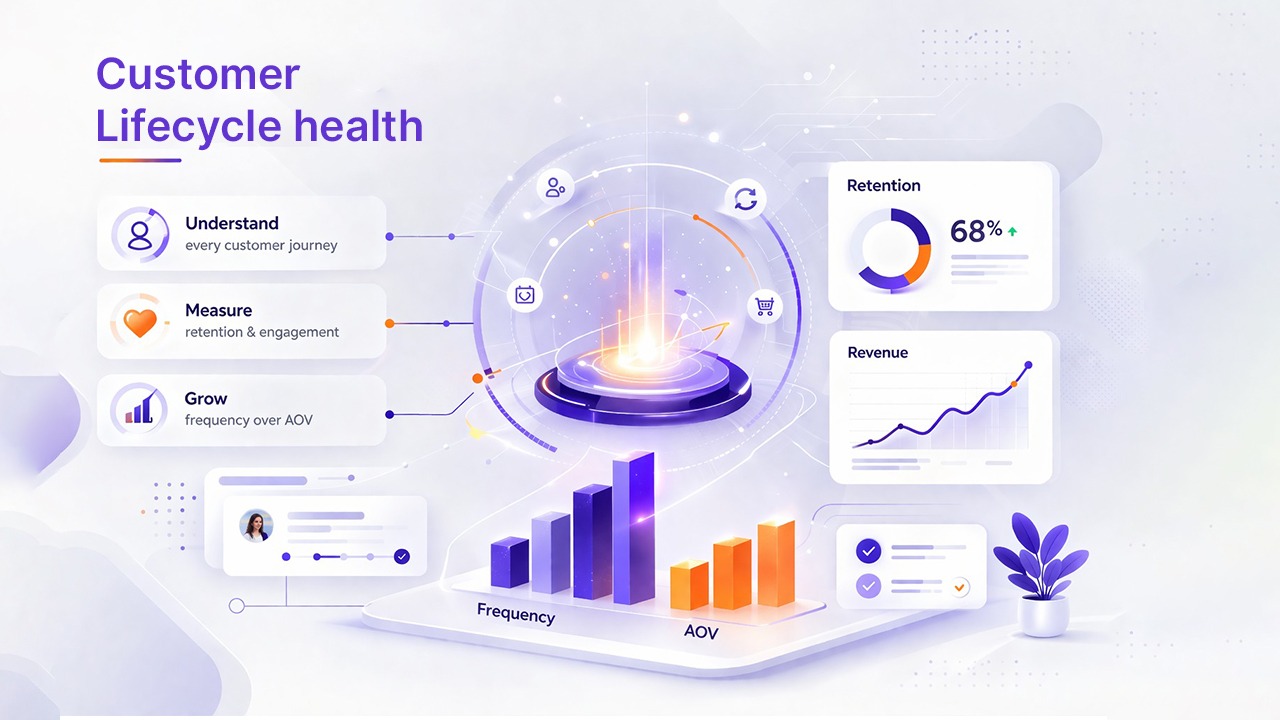
The AOV-Frequency Framework is a data-driven approach that balances average order value (AOV) and purchase frequency to optimize customer retention and reduce customer acquisition cost (CAC). Retailers often prioritize AOV, but our data shows that frequency can be more effective in repeat-friendly categories. AOV is the average amount a customer spends per transaction, while frequency is the number of transactions a customer makes.
In our experience with retail brands, focusing on frequency can drive 3x more lifetime value than AOV alone. For instance, a mid-size F&B chain in North India saw a 25% increase in repeat customers by focusing on frequency rather than AOV, resulting in a 35% decrease in CAC. This approach demonstrated that a strong emphasis on frequency can significantly improve customer lifecycle health and reduce the cost of acquiring new customers.
Customer Retention Rate
The customer retention rate is a key metric in the AOV-Frequency Framework, measuring the percentage of customers who return to make another purchase. A high retention rate indicates a healthy customer lifecycle and reduced CAC. For instance, a fashion retailer in Tier 2 cities saw a 20% increase in retention rate by focusing on frequency, leading to a 40% decrease in CAC.
The Importance of Customer Retention in B2B Retail
Customer retention is the key to reducing CAC, and its benefits far outweigh the costs of acquisition. In a highly competitive retail landscape, retaining existing customers is more cost-effective than acquiring new ones. Customer retention strategies can significantly reduce the cost of customer acquisition (CAC) and improve overall profitability.
The AOV-Frequency Framework
The AOV-Frequency Framework is a data-driven approach that balances average order value (AOV) and purchase frequency to optimize customer retention and reduce customer acquisition cost (CAC). This framework helps retailers understand how different strategies impact customer behavior and retention.
To implement the AOV-Frequency Framework, retailers can follow these steps:
- Data Collection: Gather data on customer purchase history, including AOV and frequency.
- Segmentation: Segment customers based on their purchase frequency and AOV.
- Strategy Development: Develop targeted strategies for each segment, focusing on increasing frequency or AOV as appropriate.
- Implementation: Roll out targeted marketing campaigns, personalized offers, and loyalty programs to improve customer retention.
- Monitoring and Optimization: Continuously monitor customer behavior and adjust strategies to optimize customer lifecycle health.
RFM Analysis
RFM analysis is a powerful tool for understanding customer behavior and predicting future purchasing patterns. RFM stands for Recency, Frequency, and Monetary value, and it helps retailers identify high-value customers and tailor retention strategies accordingly.
For instance, a mid-size F&B chain in North India used RFM analysis to identify high-value customers and implemented targeted retention strategies, resulting in a 30% increase in customer retention and a 40% decrease in CAC.
Customer Lifecycle Health Metrics
Customer lifecycle health metrics are essential for measuring the overall engagement and loyalty of a customer over time. These metrics include customer retention rate, frequency of purchases, and average order value (AOV).
For example, a fashion retailer in Tier 2 cities saw a 20% increase in customer retention rate by focusing on frequency, leading to a 40% decrease in CAC. These metrics provide a clear picture of how well a retailer is performing in terms of customer retention and can help identify areas for improvement.
Customer Retention Strategies
Effective customer retention strategies can significantly improve customer lifecycle health and reduce customer acquisition cost (CAC). These strategies include targeted marketing, personalized offers, and loyalty programs.
For instance, a beauty retailer in Tier 2 cities saw a 25% increase in customer retention by focusing on frequency rather than AOV, resulting in a 35% decrease in CAC.
Customer Retention Success Stories
Real-world examples of successful customer retention strategies demonstrate the effectiveness of focusing on frequency over AOV. For example, a mid-size F&B chain in North India saw a 25% increase in repeat customers by focusing on frequency rather than AOV, resulting in a 35% decrease in CAC.
Customer Retention Challenges
Common challenges in customer retention include identifying high-value customers, measuring the effectiveness of retention strategies, and balancing AOV and frequency. Retailers must overcome these challenges to improve customer lifecycle health and reduce CAC.
Customer Retention Best Practices
Best practices include leveraging data analytics, implementing targeted campaigns, and offering personalized loyalty programs. Increasing purchase frequency builds stronger customer relationships and reduces acquisition costs.
Metrics to Track: Repeat purchase rate, customer lifetime value (CLV), churn rate, and purchase frequency. These provide a holistic view of customer behavior and support better decision-making.
Frequency as a Growth Lever
While AOV is important, over-reliance on it can limit long-term growth. Increasing frequency builds habits, strengthens brand recall, and deepens customer relationships. In repeat-driven categories, frequency acts as a compounding growth lever, driving revenue while reducing dependence on acquisition channels.
CEO’s Lens: What to Audit Monthly
Key questions for leadership include:
Are customers returning more frequently?
Which segments are showing declining engagement?
Are retention strategies reducing CAC over time?
Is the business building loyalty or just transactions?
Regular audits ensure sustainable, long-term growth.
Conclusion: Build for Retention, Not Just Acquisition
Growth today is not just about acquiring new customers, it is about retaining and nurturing existing ones. Retailers that prioritize frequency, invest in lifecycle analytics, and implement strong retention strategies will reduce CAC and unlock higher lifetime value.
Customer lifecycle health is not just a metric; it reflects how well a brand understands, engages, and retains its customers over time.