
Introduction
In the high-stakes world of Indian retail, the “Occasion-Only” shopper is a familiar protagonist. They emerge during the peak of Diwali, the frenzy of End-of-Season Sales (EOSS), or the wedding season, contribute to a massive spike in top-line revenue, and then vanish for the next nine months. While these shoppers are essential for hitting seasonal targets, relying on them creates a volatile revenue “sawtooth” pattern.
To build a resilient enterprise, CRM heads must distinguish these deal-seekers from “Year-Round Shoppers”, the high-frequency cohorts that sustain the brand during the “quiet” months of February or July. True loyalty strategy lies not in treating them the same, but in building two distinct engagement tracks that optimize for both immediate volume and long-term Customer Lifetime Value (LTV).
Core Insight: The RFM Lens on Seasonality
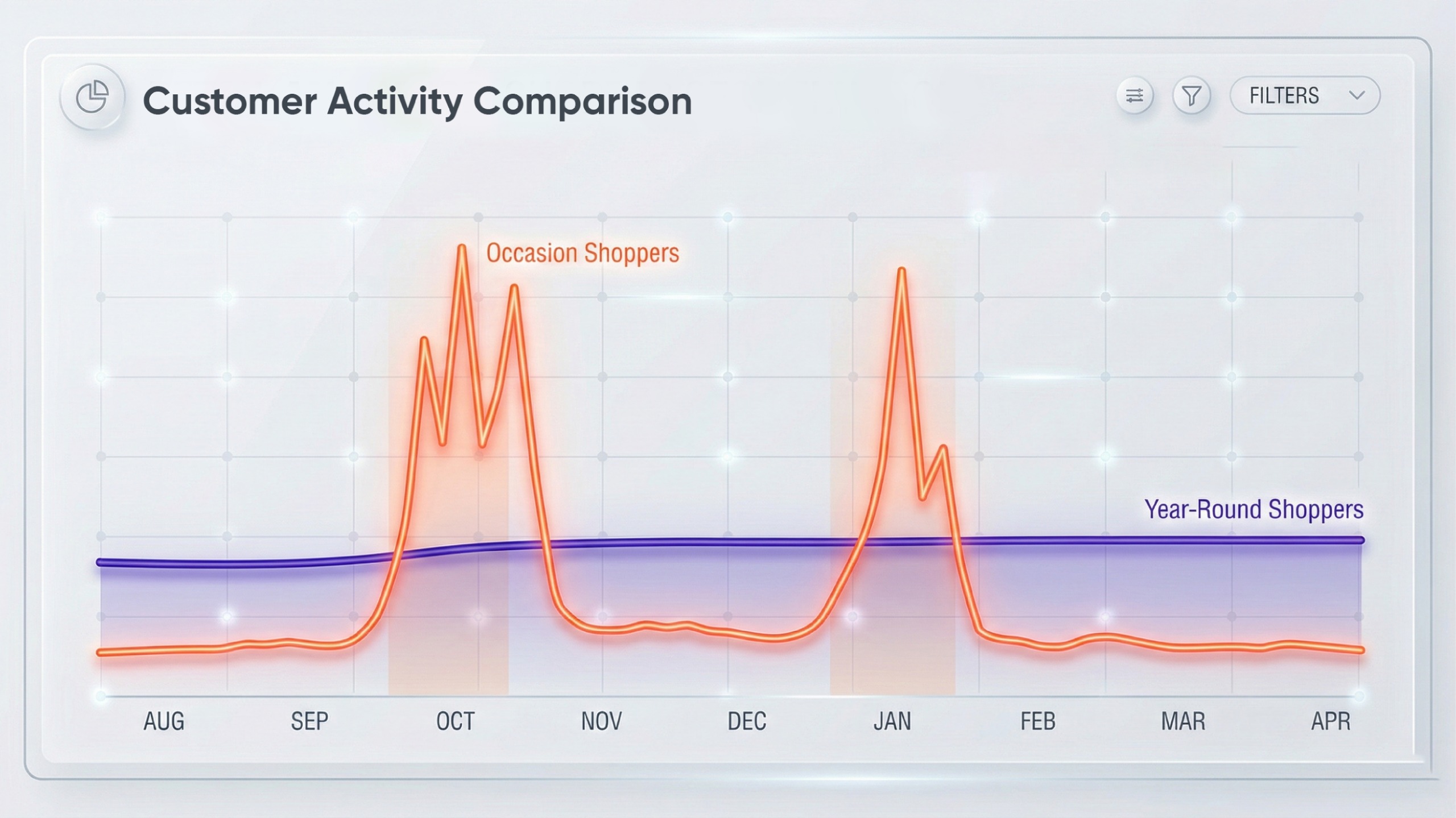
The fundamental difference between these two cohorts isn’t just what they buy, but the intent behind the purchase.
- Occasion-Only Shoppers are driven by external triggers: a festival, a gift requirement, or a deep discount. Their recency is high only during specific months, and their frequency is locked at 1.2 to 1.5 transactions per year.
- Year-Round Shoppers are driven by internal brand affinity. Their recency is consistent, and their frequency ranges from 4 to 12 transactions annually.
For a retail enterprise, the goal is to identify the “Occasion-Only” segment early and attempt to migrate the top 10% of them into the “Year-Round” category through behavior-based triggers, while maintaining high-margin engagement with the existing year-round loyalists.
Why This Matters for Retail Enterprises
In the Indian retail landscape, the “off-season” (typically post-festive periods like February or the monsoon months) is where profitability is won or lost. If your CRM strategy only talks to customers when you have a sale, you are training them to be Occasion-Only shoppers.
Globally, enterprise brands are shifting from “Mass Promotion” to “Cohort-Specific Incentivization.” For instance, sending a 40% discount voucher to a Year-Round shopper who was going to buy anyway is a waste of margin.
Conversely, sending a full-price “New Arrival” preview to an Occasion-Only shopper will likely result in zero conversion. Segmentation allows for Margin Optimization giving the right incentive only to those who need it to take action.
Strategic Framework: The Two-Track Engagement Model
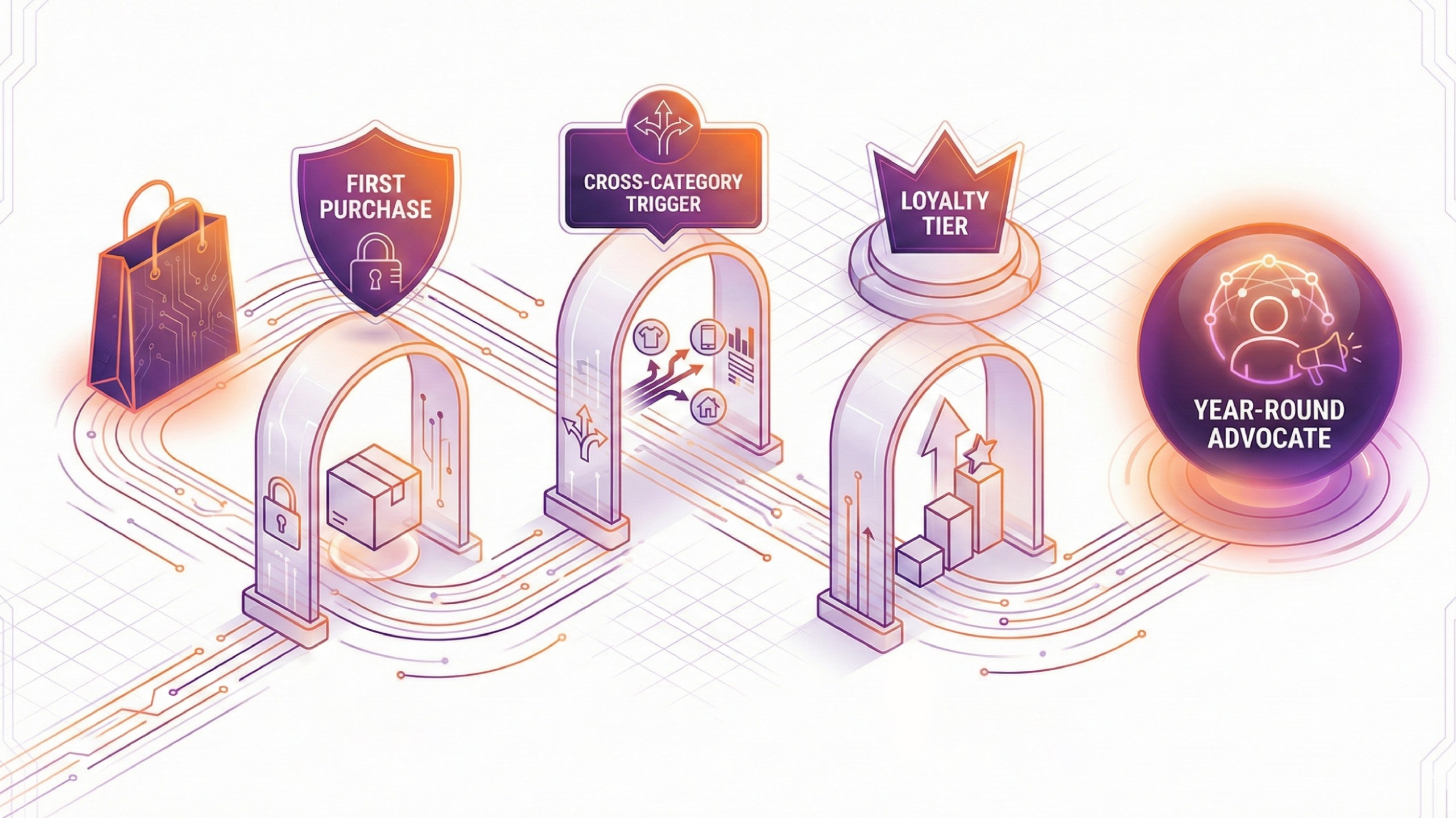
1. The Migration Track (For Occasion-Only Shoppers) The objective here is to break the “once-a-year” habit.
- The “Second Purchase” Trigger: The most critical moment is the 30-45 days following a seasonal purchase. Use eWards’ automated triggers to send a “Category Cross-Sell” offer. If they bought ethnic wear in October, suggest contemporary workwear in November.
- Gamification: Use milestone-based rewards. “Shop in 3 different months to unlock an Elite Voucher.” This shifts the focus from the event to the habit.
2. The Retention Track (For Year-Round Shoppers) These customers don’t need deep discounts; they need recognition and convenience.
- Early Access: Provide “white-glove” services, such as home trials or early access to new collections before the sale starts.
- Non-Monetary Rewards: Focus on experiential loyalty, styling sessions, birthday surprises, or “No-Questions-Asked” returns.
Common Mistakes in Segmenting These Groups
- Over-communicating to the Occasion-Only Group: Sending daily SMS alerts to someone who only buys during Diwali leads to high unsubscribe rates.
- Ignoring the “Sleepers”: Not recognizing when a Year-Round shopper is slipping into an Occasion-Only pattern. This is a red flag for brand fatigue or competitor poaching.
eWards leverages advanced RFM segmentation to provide actionable insights into customer behavior, enabling businesses to precisely identify key cohorts like “Occasion-Only” vs. “Year-Round” shoppers. With this segmentation, you can create personalized engagement tracks and automated, behavior-based triggers to ensure the right message reaches the right customer at the right time. Additionally, RFM segmentation optimizes profitability by avoiding over-discounting loyal customers while offering targeted incentives to retain seasonal shoppers.
Conclusion: Turning Data into Executive Action
The 2026 retail landscape demands more than “spray and pray” marketing. By segmenting your database into Occasion-Only and Year-Round cohorts, you move from being a seasonal participant to a market leader. The actionable takeaway for CRM teams is simple: Audit your frequency distribution today. If more than 70% of your database has a frequency of 1, your 2026-27 strategy must prioritize the “Migration Track.” Success isn’t found in the size of your database, but in the velocity of your cohorts.
Subscribe for Smarter, Data-Driven CRM Insights
Ready to elevate your CRM strategy with smarter testing? Subscribe to our newsletter for expert insights on AI-driven CRM optimization for improved customer engagement and ROI.