
Stop reading averages. Read cohorts. Cohort retention analysis is one of the most valuable tools at your disposal for understanding customer behavior. It gives you insights into how different groups of customers engage with your brand over time, helping you identify trends, measure loyalty, and find areas to improve retention strategies.
But despite its power, many businesses don’t fully leverage the data that cohorts provide. In this article, we will break down how to “analyze” your cohort retention data and what it can reveal about your customers’ behavior.

What is Cohort Retention?
Before we dive into the specifics of cohort retention analysis, let’s define what cohort retention is.
Cohorts are groups of customers who share a common characteristic, often defined by the time period in which they made their first purchase or interacted with your brand. Retention in this context refers to how many of these customers come back to make additional purchases over a specific period (e.g., after 30 days, 60 days, or a year).
A cohort retention analysis helps you measure the percentage of customers who continue to engage with your brand after their initial purchase. If you’re struggling with high acquisition costs and low repeat purchase rates, cohort retention can help you identify which customer segments are worth the investment.
The Importance of Cohort Retention in CRM Strategy
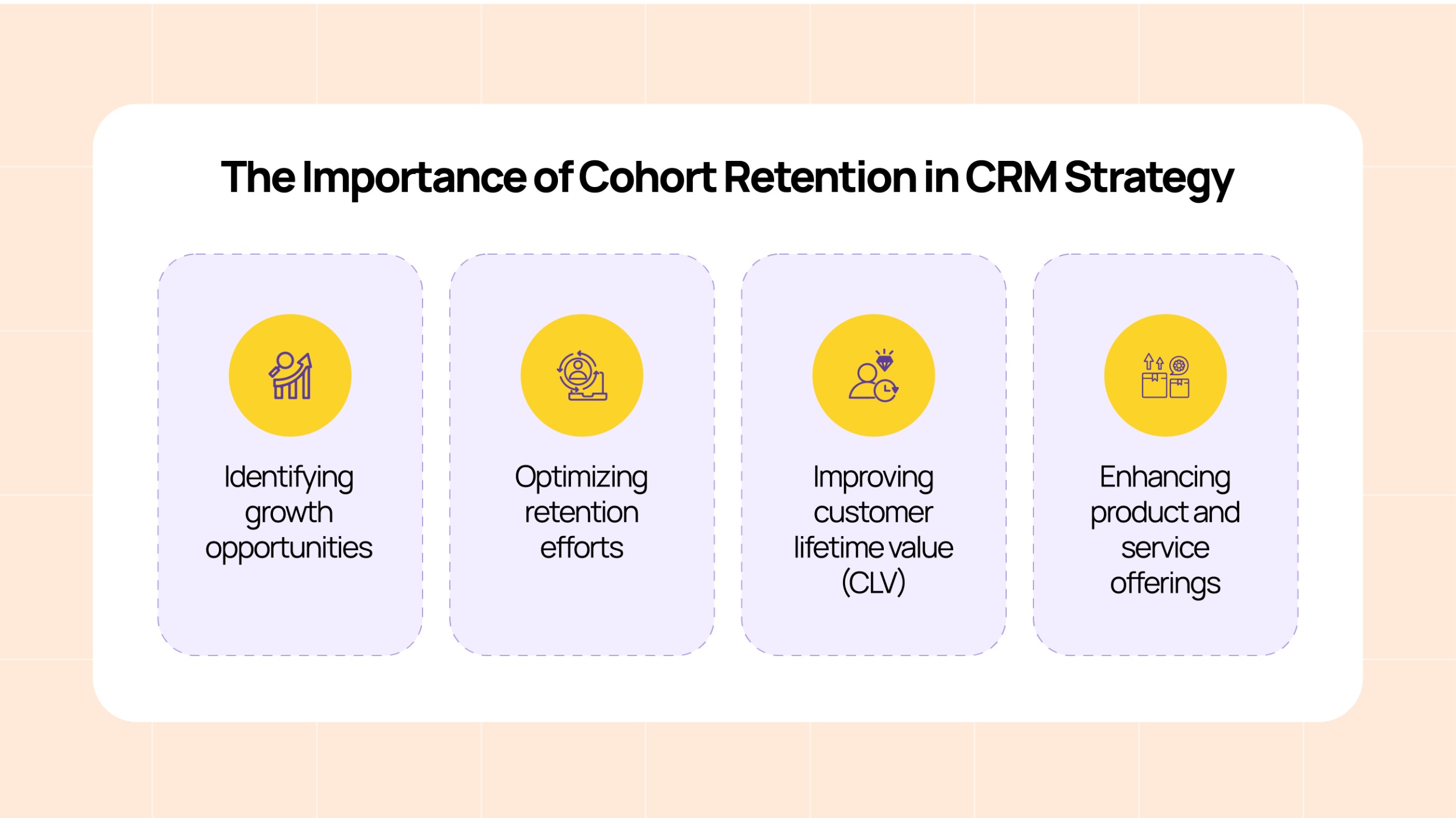
For business owners, marketing managers, and CRM professionals, understanding cohort retention is essential for:
- Identifying growth opportunities: By looking at cohort performance, you can understand which customer segments are most likely to stick around and which ones need more attention.
- Optimizing retention efforts: Cohort analysis helps identify what drives customer loyalty and which tactics work for specific groups, enabling targeted marketing strategies.
- Improving customer lifetime value (CLV): By increasing the retention rate of high-value cohorts, businesses can improve overall CLV, reducing the need for excessive customer acquisition spending.
- Enhancing product and service offerings: Cohort analysis reveals which segments engage with certain products or services, helping you improve or expand offerings.
Step-by-Step Guide to Cohort Retention Analysis
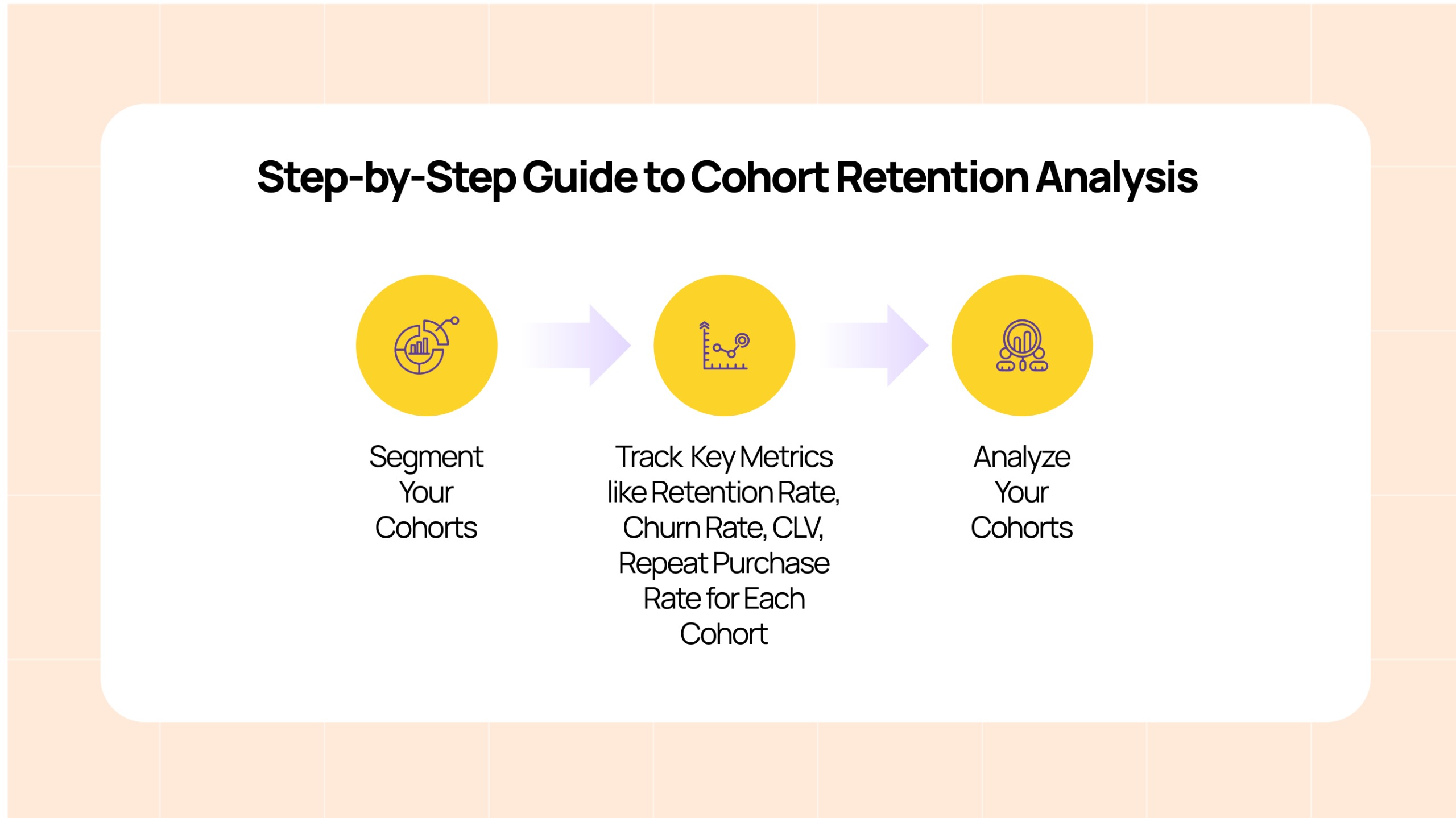
1. Segmenting Your Cohorts: How to Start
The first step in a cohort retention analysis is to define how you’ll segment your customers. While you can create cohorts based on a variety of factors, time-based cohorts (usually grouped by the month or quarter of their first purchase) are the most common and effective.
- Example: Group customers by the month they made their first purchase – January cohort, February cohort, March cohort, etc.
- You can also segment by demographics, purchase behavior, or customer channels (e.g., email, social media).
With eWards CRM, you can automatically segment customers by RFM (Recency, Frequency, and Monetary) and track their behavior over time, enabling you to refine your retention strategies without manual effort. Additionally, our Multi Insight tool allows you to combine multiple segmentation criteria into one view, helping you create hyper-targeted customer cohorts.
2. Key Metrics to Track for Each Cohort
Once you’ve segmented your cohorts, here are the essential metrics to measure:
- Retention Rate: The percentage of customers who make a repeat purchase within a given time period after their first purchase.
Formula: (Number of returning customers in the cohort / Number of customers in the cohort) x 100
- Churn Rate: The percentage of customers who do not make a repeat purchase, which is essentially the opposite of retention.
Formula: 100 – Retention Rate
- CLV (Customer Lifetime Value): How much revenue you can expect from a cohort over its lifetime.
Formula: Average revenue per user (ARPU) * Average lifespan of customers in that cohort.
- Repeat Purchase Rate: The percentage of customers in the cohort who make at least one additional purchase after their initial purchase.
3. Analyzing Your Cohorts: What They’re Telling You
Cohort retention data doesn’t just sit there, it tells you a story. Let’s break down the different types of insights you can gain from cohort analysis.
1. Identifying Patterns in Customer Behavior
- High Retention Rate Cohorts: These customers return often, and their behavior can help you identify what’s working. It could be that they’re highly engaged with your product, they receive personalized communication, or they are part of a loyalty program.
- Low Retention Rate Cohorts: A high churn rate might indicate problems in your customer experience or product offering. Maybe your onboarding process is too complicated, or the product isn’t meeting expectations.
2. Spotting Customer Segments that Need Attention
Not all cohorts behave the same way. Here are a few things to look for:
- Early Drop-offs: If a cohort’s retention rate drops significantly in the first 30 days, it might be a signal that your onboarding process or initial customer experience needs improvement.
- Late Stage Churn: Cohorts that drop off after a few months could indicate that your product or service isn’t providing enough ongoing value to keep customers engaged.
3. Understanding Seasonality and Trends
Customer behavior can be influenced by external factors such as holidays, sales seasons, or even weather. A cohort’s performance might vary greatly during different times of the year. By analyzing trends over time, you can optimize your marketing and sales strategies to align with these cycles.
Making Data-Driven Decisions with Cohort Retention
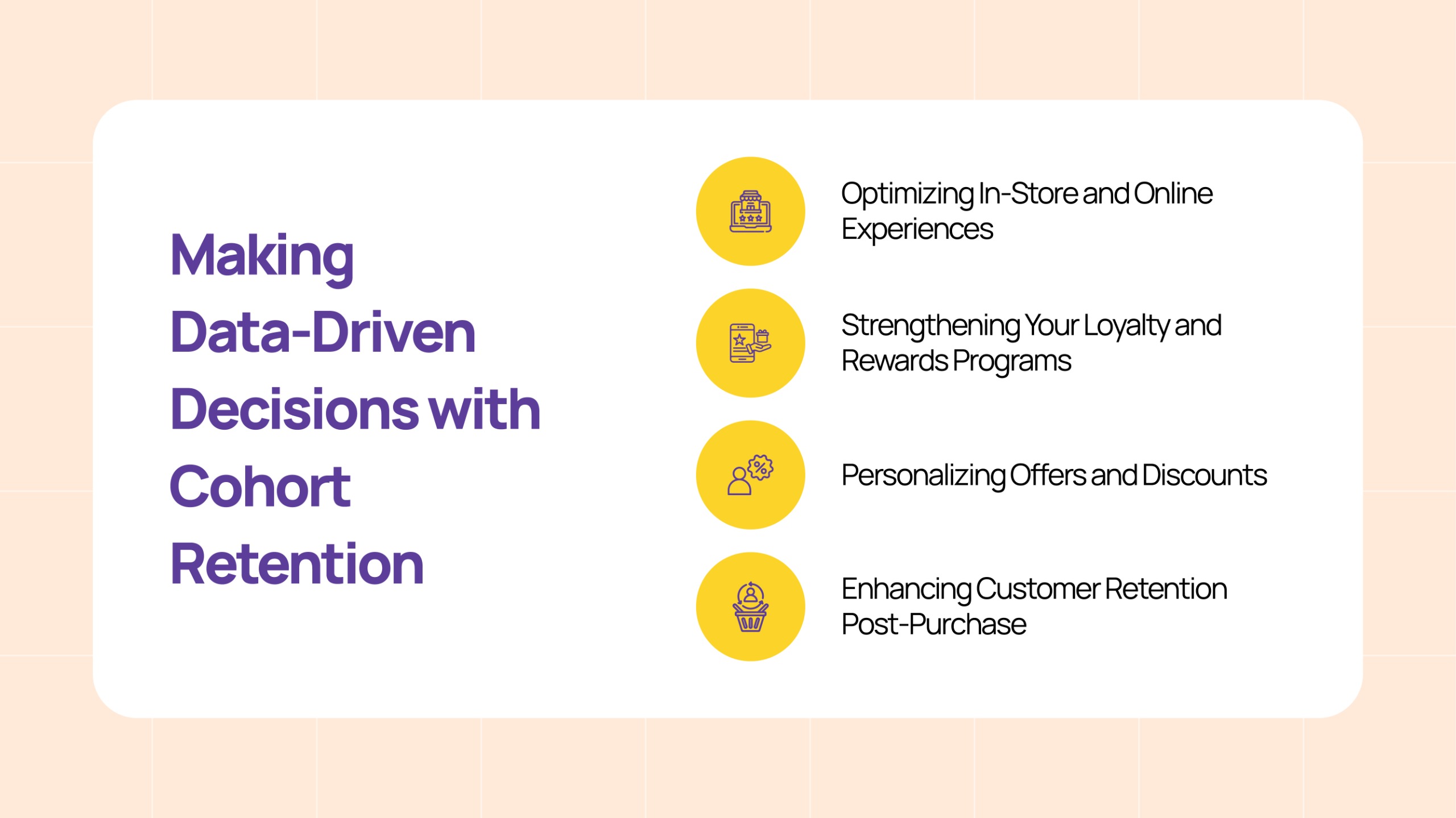
1. Optimizing In-Store and Online Experiences
For retail brands with both offline and online channels, cohort retention data reveals where customers engage most. If certain cohorts show higher retention online but struggle in-store (or vice versa), it points to areas needing improvement. For example, if online customers drop off after the first purchase, consider enhancing the shopping experience with better navigation, personalized recommendations, or clearer product descriptions. Similarly, identify in-store locations with high retention and replicate successful strategies across other stores.
2. Strengthening Your Loyalty and Rewards Programs
Cohort retention analysis helps evaluate the effectiveness of loyalty programs for different customer groups. If a cohort of customers that joined your loyalty program in the past 3 months shows significantly better retention compared to those who haven’t, it might be time to enhance your loyalty offerings.
For instance, if a specific cohort of customers visits only during promotions, it might be a good idea to send personalized offers or rewards to encourage more visits outside of promotional periods. Similarly, if customers who have reached a certain loyalty tier are more likely to return, you can use this data to push customers toward higher tiers with exclusive perks.
3. Personalizing Offers and Discounts
Cohort retention data helps you understand the types of offers or discounts that resonate best with different customer groups. For example, if a cohort of frequent buyers responds better to limited-time discounts, you can tailor your marketing efforts to trigger more of these offers for that group. On the other hand, if certain cohorts are highly responsive to loyalty points or discounts on future visits, you can create personalized reward systems to nurture these behaviors.
4. Enhancing Customer Retention Post-Purchase
In both retail and F&B, customer retention isn’t just about the first purchase, it’s about ensuring they return. Cohort retention analysis can highlight which customer groups are engaging with post-purchase communication, such as follow-up messages, SMS notifications, or loyalty rewards. If certain cohorts aren’t responding to these efforts, it may be time to adjust your strategy.
Consider follow-up messages with personalized product recommendations based on their previous purchases. Sending a personalized thank-you message with a discount or exclusive offer can also be a great way to entice customers to return.
Example: Cohort Retention Analysis in Action
Let’s take a look at how real-world data can shape your strategy. For example:
Company: A subscription-based eCommerce business
Cohort Grouping: Customers who subscribed in January, February, and March.
Key Insights:
- January Cohort: High retention at 60% after 3 months, 45% after 6 months
- February Cohort: Moderate retention at 50% after 3 months, 35% after 6 months
- March Cohort: Early drop-off, 30% after 3 months, only 10% after 6 months
Actionable Insights:
- The January cohort is highly engaged and continues to return. The business can reinforce the marketing strategies that drove this success, like personalized discounts and customer support.
- February’s moderate performance shows an opportunity to implement stronger follow-up communications to keep these customers engaged.
- March’s low retention signals that the business might need to improve its product offering, reduce friction in the sign-up process, or offer better incentives to keep customers engaged in the early stages.
Conclusion: Discovering Insights from Cohort Retention Analysis
Cohort retention analysis is an essential tool for understanding what’s working (and what’s not) with your customers. By carefully analyzing retention patterns across different customer groups, you can implement actionable insights to improve customer engagement, reduce churn, and increase customer lifetime value.
Start by defining your cohorts based on key characteristics like acquisition time and purchase behavior. Measure retention, churn, and other critical metrics to identify areas of improvement. Use these insights to optimize and drive stronger customer loyalty and reduce the reliance on expensive customer acquisition campaigns.
The next time you check your cohort data, remember: Your cohorts are telling you something. It’s up to you to listen and act.
FAQs
Cohort retention analysis tracks customer groups based on shared characteristics, such as first purchase time, to understand loyalty and improve retention. It helps optimize marketing strategies and increase customer lifetime value (CLV).
Segment customers by factors like the month of first purchase, demographics, purchase behavior, or channels. Tools like eWards CRM can automate segmentation using criteria like RFM (Recency, Frequency, Monetary).
It identifies high-performing cohorts for successful strategies and highlights underperforming ones. This insight helps refine loyalty programs, personalize offers, and enhance both online and offline customer experiences.