
Giving away more loyalty program points doesn’t keep shoppers; it reduces low‑value purchases. When points vanish without prompting repeat visits, the program becomes a drain rather than a driver of sales.
Identify the Drain: Common Causes of Low Loyalty Points Redemption
Customers leave because they can’t see a clear way to turn loyalty program points into something they want, so the points sit idle. Fuzzy rules stop collection and spending, making the program feel like a dead end. The fix is to make earning and redemption as obvious as a price tag. Imagine a shopper scanning a receipt and instantly seeing “You have enough points for a free coffee, claim now.” That instant visual cue eliminates doubt and creates an instant reward moment at the point of purchase.
Why points get stuck?
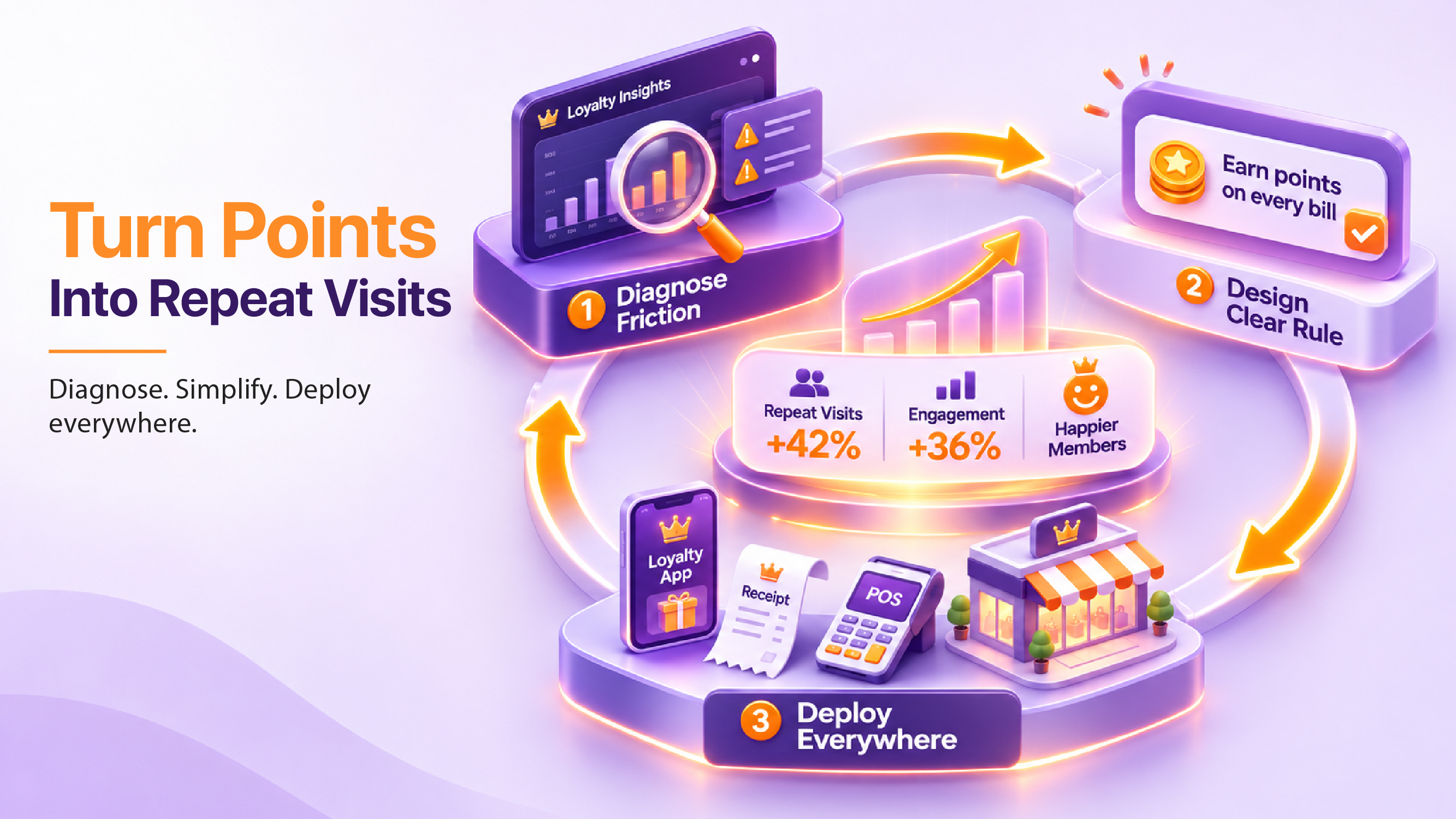
First, the earning path is hidden behind steps only a tech‑savvy manager understands. Cashiers may need a supervisor or a special code, and if they can’t explain it quickly, the customer walks away. Picture a busy Saturday morning when a line forms; the associate fumbles with a tablet, asks for a manager’s approval, and the shopper, already pressed for time, decides the effort isn’t worth the vague reward.
Second, redemption options are buried in fine print or a maze‑like app. Shoppers expect a simple “You have enough points, claim now” message; hunting through menus kills excitement. Imagine opening an app, scrolling through dozens of categories, and only finding the redemption button after several taps, the enthusiasm evaporates before the reward is even visible.
Third, the value of points is vague. Without a clear picture of what a point buys, a free snack, a discount, or an exclusive gift, the points feel abstract. Picture a customer hearing “points equal a discount” but not knowing whether that discount applies to a small item or a large cart; the uncertainty stalls any intention to redeem.
Finally, timing rules create friction. Expiring points or narrow windows penalize shoppers and make the program feel like a trap. Imagine a loyal buyer who accumulates points over months, only to receive a reminder that they will vanish in two days; the sense of loss outweighs any goodwill the program might have built.
- Confusing: earning steps that require extra actions or codes.
- Hidden: redemption choices that aren’t visible at checkout.
- Vague: unclear what a point actually buys.
- Limited: tight expiry windows that cut off usage.
- Uncommunicated: no simple reminder of balance or next reward.
Map these pain points and rewrite the rules in plain language, embedding them where the customer naturally looks: receipt, mobile screen, or associate’s script. The 3‑Step Loyalty Revitalizer framework can guide this process: (1) Diagnose the friction, (2) Design a single, crystal‑clear rule, (3) Deploy the rule across every touchpoint with consistent messaging.
Define a single, memorable way to earn points, e.g., “Earn one point for every purchase above a modest amount.” Display that line on the POS and train staff to repeat it at each transaction. When the rule is spoken aloud, it becomes part of the shopping ritual, reinforcing the perception that points are earned effortlessly.
Create a redemption trigger that appears automatically when the balance reaches a threshold, such as “You have enough points for a free treat, claim now.” This automated prompt removes the guesswork and turns the moment into an instant reward moment that the shopper can share with friends.
Clarify the reward in everyday terms: instead of abstract language, say “Swap your points for a free cup of tea.” Use the same phrasing everywhere, from the app banner to the printed receipt, so the language becomes instantly recognizable.
Adjust expiry rules to match shopping habits; if shoppers visit weekly, let points last at least a month and send a friendly reminder before they expire. A gentle nudge, “You have points, just two more visits for a free pastry,” reframes expiry as an invitation rather than a penalty.
Make the balance visible at every touchpoint: a badge on the app, a line on the receipt, and a verbal cue from the associate (“You have points, you’re close to a free dessert”). Consistent visibility builds a mental ledger in the shopper’s mind, encouraging them to plan the next purchase around the pending reward.
By simplifying the earning path, surfacing redemption, and speaking the reward plainly, you turn dormant loyalty program points into a catalyst for repeat visits.
Action: Audit your checkout flow today and rewrite any step that isn’t a single, clear sentence.
Streamline Point Accumulation: Making Earning Simple and Transparent
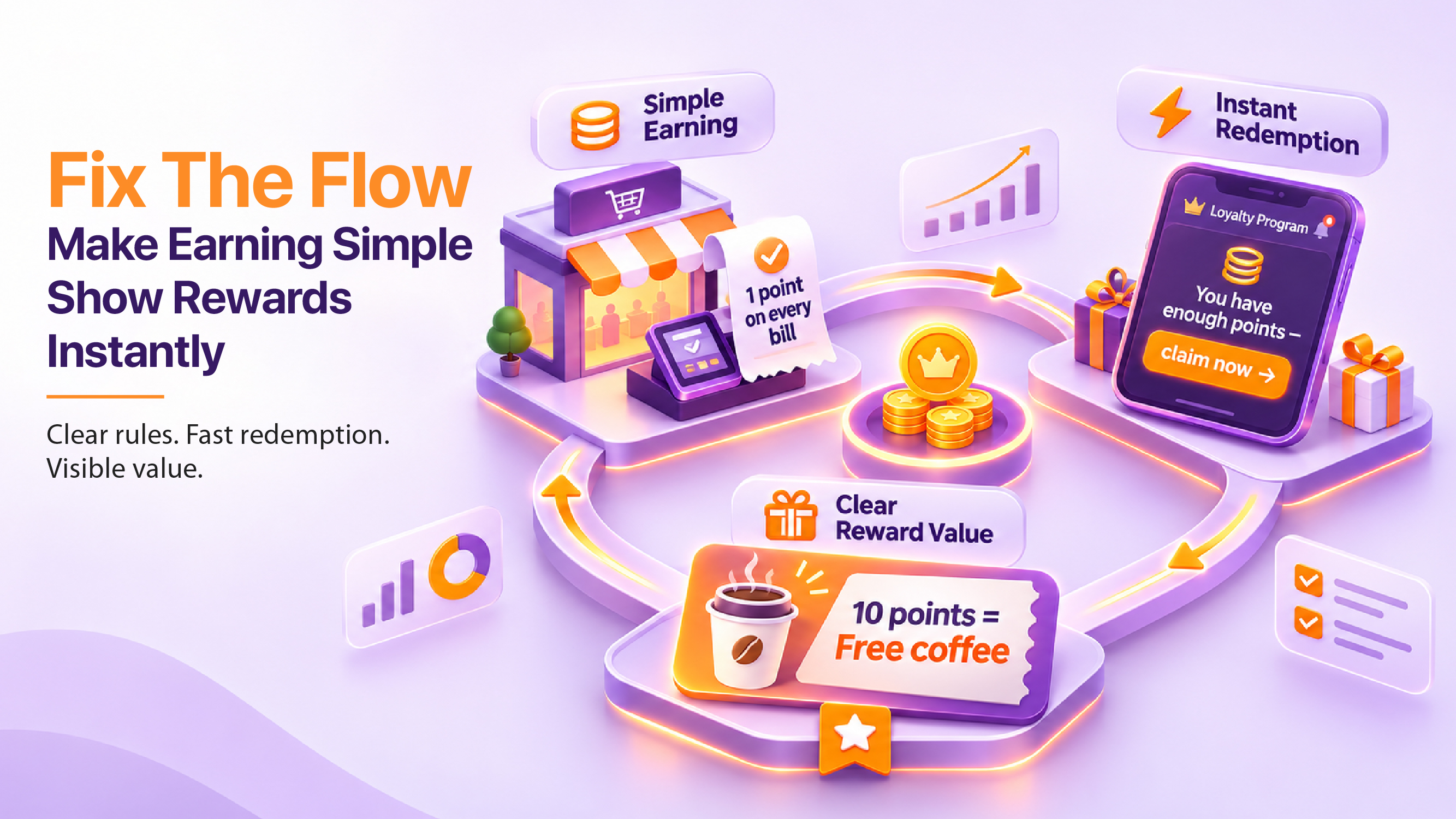
Making points easy to earn stops confusion and keeps customers returning. When the rule book is clear, every visit adds value, driving more purchases and word‑of‑mouth. Imagine a shopper who knows that every purchase adds a point; the mental math disappears and the program becomes a natural part of the buying habit.
Strip the earning formula to one or two actions that happen on almost every ticket. A rule like “earn points on every bill” removes extra steps and lets cashiers hand a slip or a quick message instantly. Picture a busy associate handing a receipt that reads, “You earned points on this purchase, check your balance now.” The simplicity fuels the habit loop.
Deploy the same clear rule across all channels, online, in‑store, and mobile. When the message is identical, customers develop a single mental model of how points work, and that model guides future spending.
Finally, train staff to announce the balance at the close of each transaction. A brief, “You have points, you’re close to a free item,” reinforces progress and nudges the shopper toward the next visit.
Action: Simplify your earning rule to a single sentence and place it on every customer‑facing surface.
Frequently Asked Questions
1. How can I reduce the drain of loyalty program points in B2B retail?
Streamline the points accrual rules so that only high‑margin purchases generate points, and set a minimum spend threshold for earning. Pair this with clear communication about expiration dates, so buyers plan their orders to avoid losing points, thereby reducing the perceived drain.
2. What are common pitfalls in loyalty program points management?
Over‑complicating the points structure with too many categories or tiers often confuses buyers and leads to disengagement. Additionally, failing to align point values with actual product costs can create a perception that points are worthless, causing a drain on the program’s credibility.
3. How do I quickly optimize loyalty rewards for higher redemption?
Introduce targeted, time‑limited redemption offers that match the inventory you need to move, such as “double points on safety equipment next month.” Also, provide flexible redemption options, like instant discounts on bulk orders, to encourage immediate use.
4. Loyalty program points vs. tiered rewards: which works better for B2B?
Tiered rewards tend to create a clearer progression and can motivate larger accounts to reach higher levels, while points offer flexibility for smaller purchases. A hybrid approach, using points for everyday buys and tiers for volume milestones, often delivers the best engagement in B2B environments.
5. What ROI can I expect from fixing loyalty program points issues?
Improving the points system typically leads to higher repeat order frequency and larger average basket sizes, as buyers feel their spend is more valuable. This heightened loyalty can translate into steadier revenue streams and reduced acquisition costs over time.
When loyalty points feel like a drain, it’s because the path to earn and redeem them is hidden and confusing. By making the earning and redemption process as clear and instant as a price tag, you transform idle points into tangible rewards that keep shoppers coming back. A simple, visible cue at the point of purchase turns a passive program into an active driver of engagement.