
Many retail leaders believe that a growing subscriber database is a guarantee of future campaign success. The reality is that a massive database often hides a decaying audience, quietly draining your marketing budget while yielding fewer store visits. This step-by-step guide will show you how to diagnose and fix SMS list underperformance across your retail outlets before the next festive rush.
Before You Start
Before addressing SMS list underperformance, ensure your store billing systems and marketing platforms are fully integrated. You need clean, unmerged customer profiles where store purchase history matches mobile numbers. Ensure your team has direct access to delivery reports, opt-out logs, and campaign click data from the previous three months to establish an accurate performance baseline.
1. Define Your Engagement Thresholds
You cannot fix list decay until you establish what an active customer looks like for your specific retail format. A grocery shopper visits weekly, while a bridal wear customer might visit once a year, meaning inactivity must be defined by purchase cycles rather than arbitrary calendar months.
- Group your customer database by purchase frequency rather than putting everyone into a single broadcast bucket.
- Identify the maximum time that typically passes between a customer’s first and second purchase at your stores.
- Mark any customer who has exceeded this typical purchase gap by more than double as a high‑risk inactive profile.
Pro Tip: Build a dynamic RFM matrix in your CRM that automatically flags customers the moment they transition from active shoppers to slipping cohorts.
2. Analyze Delivery and Bounce Patterns
A primary driver of SMS list underperformance is sending promotional messages to dead, inactive, or non‑existent mobile numbers. Over time, shoppers change numbers, port to different networks, or permanently switch off their SIM cards, leaving you paying for undelivered messages.
- Pull the delivery status reports from your last five major weekend campaigns across all store locations.
- Separate temporary delivery failures, such as out‑of‑network issues, from permanent failures like invalid numbers.
- Create an automated rule to immediately exclude any mobile number that returns a permanent failure code twice.
Pro Tip: Run your entire database through a real‑time mobile number verification tool before launching major seasonal campaigns like Diwali or End‑of‑Season Sales.
3. Segment by True Purchase Recency

Blasting your entire subscriber database with the same discount offer trains your best shoppers to never buy at full price. To restore your SMS marketing list health, you must separate your active promoters from those who have not stepped into your stores for months.
- Divide your database into three clear groups: recent shoppers, occasional visitors, and long‑term lapsed customers.
- Exclude the long‑term lapsed group from your daily or weekly promotional broadcasts to protect your sender reputation.
- Reserve high‑value incentives exclusively for the lapsed group, while sending product arrivals and styling tips to active shoppers.
Pro Tip: Use the Pulse‑Check Protocol to monitor how quickly different customer cohorts move from highly engaged to completely silent.
4. Audit Opt‑Out and Complaint Rates
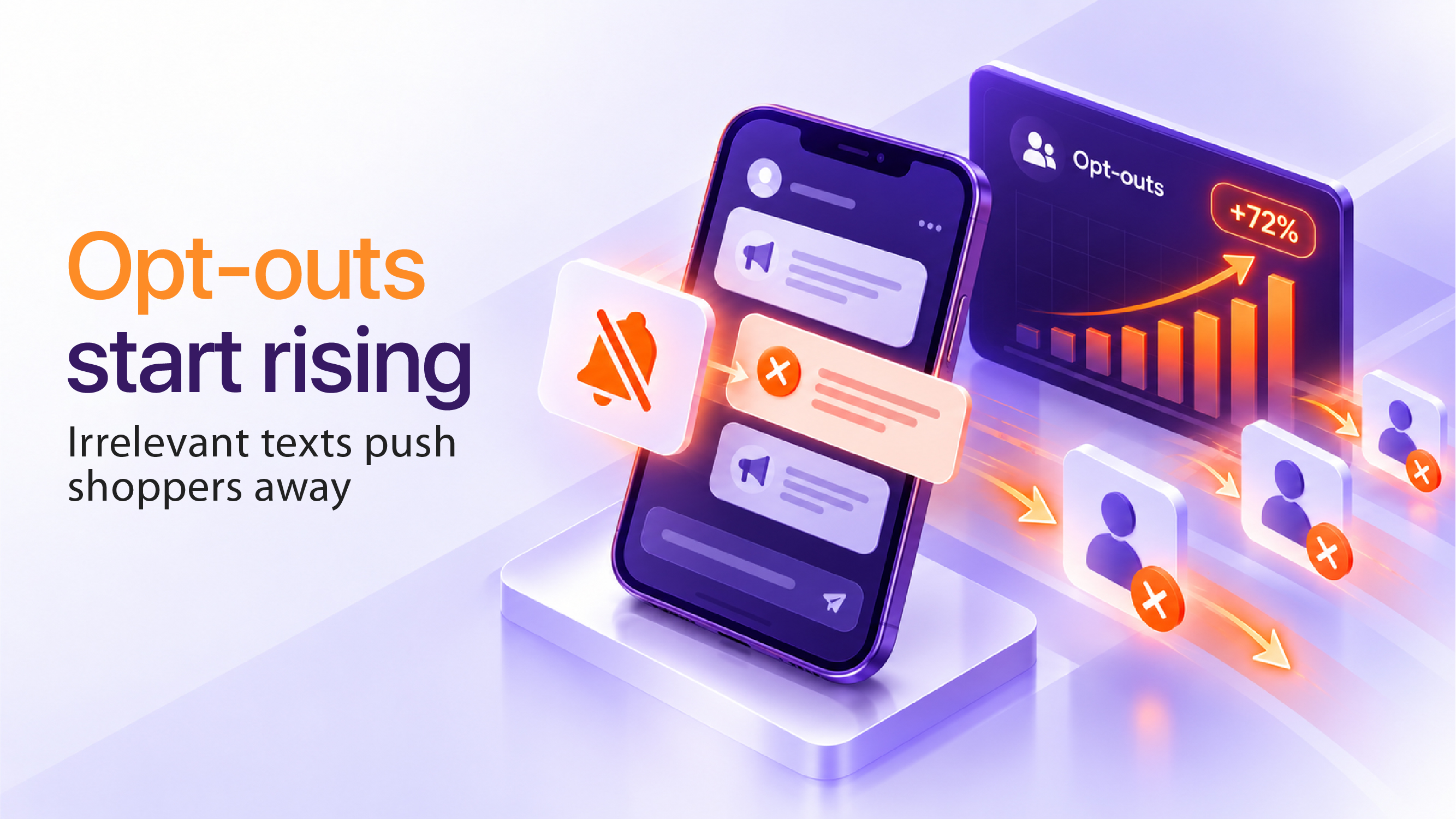
A rising SMS list churn rate is a clear sign that your messaging frequency or content relevance is missing the mark. When shoppers feel bombarded by irrelevant texts, they do not just ignore them; they actively opt out or report your sender ID.
- Track the exact number of opt‑out requests received during the hours immediately following a promotional broadcast.
- Review the opt‑out spikes against the specific offer, product category, and sending time of that campaign.
- Make the opt‑out process simple and transparent to prevent frustrated shoppers from marking your messages as spam at the operator level.
Pro Tip: A sudden spike in opt‑outs after a campaign usually indicates that your segmentation was too broad or the offer lacked local relevance.
5. Deploy a Targeted Re‑Engagement Campaign
Before permanently removing inactive numbers, run a final, high‑impact campaign designed to separate dead contacts from those who are simply dormant. This campaign must offer immediate, friction‑free value to encourage a store visit or link click.
- Draft a highly personalized message addressing the customer by name and acknowledging their long absence from your store.
- Include a unique, single‑use digital coupon code that can be easily scanned at any of your physical billing counters.
- Set a strict expiry date on the offer to create a genuine sense of urgency.
- Track the redemption rate in real time; any number that does not engage within the expiry window should be flagged for removal or moved to a “re‑engage later” bucket.
- Follow up the initial re‑engagement text with a gentle reminder 48 hours later, using a different tone (e.g., a friendly reminder rather than a hard sell) to capture those who may have missed the first message.
- Document the entire flow in your CRM so that future campaigns can automatically reference the outcome of this re‑engagement effort.
Pro Tip: Pair the re‑engagement SMS with a short, mobile‑friendly landing page that showcases a single best‑selling product or a quick “what’s new” carousel, reducing the steps needed for a hesitant shopper to take action.
6. Real‑World Indian Retail Scenario
Consider a mid‑size fashion chain operating in Mumbai, Delhi, and Bengaluru. The brand launched an SMS campaign announcing a “Monsoon Mega Sale” and sent the same message to its entire subscriber list of 200,000 numbers. Within 24 hours, the store managers noticed a modest footfall increase, but the overall conversion rate was far below expectations. When the marketing team dug into the data, they discovered that a large portion of the list consisted of numbers collected during a year‑old college festival promotion—students who had since moved abroad or switched to different carriers. The delivery reports showed a high bounce rate, and the opt‑out logs spiked after the first batch of messages. By applying the steps outlined above—segmenting by recent purchase, cleaning the list of permanently failed numbers, and running a targeted re‑engagement text to the remaining active shoppers—the chain was able to trim its list by a significant margin, improve delivery rates, and see a noticeable lift in sales during the next seasonal push. This real‑world example illustrates how ignoring SMS list underperformance can erode campaign ROI, while a disciplined hygiene routine restores effectiveness without needing to acquire new subscribers.
7. Implementation Framework: The Pulse‑Check Protocol
The Pulse‑Check Protocol is a structured, repeatable framework designed to keep SMS list health in continuous focus. It consists of four interlocking phases that align with the retail calendar and ensure that list decay is identified early, acted upon quickly, and prevented from re‑emerging.
- Pulse Capture (Weekly): Pull the latest delivery, bounce, and engagement metrics from your SMS gateway. Record key indicators such as delivery success rate, click‑through rate, and opt‑out count. Store these metrics in a dedicated “Pulse Dashboard” that is visible to both the store operations team and the central marketing office.
- Pulse Analysis (Bi‑weekly): Compare the current week’s metrics against the baseline established during the “Before You Start” phase. Highlight any deviations that exceed predefined thresholds (for example, a sudden rise in permanent failures or a dip in click‑throughs). Use the analysis to prioritize which cohorts need immediate attention.
- Pulse Action (Monthly): Execute the corrective actions identified in the analysis. This may involve running a targeted re‑engagement blast, pruning dead numbers, or adjusting segmentation rules. Document each action in the Pulse Dashboard, noting the expected impact and the actual outcome after the next campaign.
- Pulse Review (Quarterly): Conduct a comprehensive review of all Pulse activities over the past three months. Assess the overall health of the SMS list, calculate the net improvement in engagement, and refine the threshold settings for future cycles. This quarterly review is also the ideal moment to align the SMS hygiene schedule with upcoming major retail events such as festive sales or new store openings.
By embedding the Pulse‑Check Protocol into your regular operational rhythm, you turn SMS list underperformance from an occasional surprise into a predictable, manageable metric. The protocol’s cyclical nature ensures that every new subscriber is vetted, every dormant contact is re‑engaged or retired, and every campaign benefits from a list that reflects true shopper intent.
Pro Tip: Integrate the Pulse Dashboard with your existing BI tools so that senior leadership can see the direct correlation between list hygiene activities and store revenue trends, reinforcing the business case for ongoing investment in SMS list health.
Frequently Asked Questions
1. What are the main indicators that my SMS list is underperforming?
If customers are consistently ignoring your messages or you notice a sudden drop in response rates, it signals that your SMS list is underperforming. Another red flag is when your click‑through or conversion rates lag behind industry benchmarks for your retail niche, indicating that the audience may not be genuinely interested in your offers.
2. How can I measure SMS list churn rate accurately?
Track the number of opt‑outs or unsubscribes over a set period and compare it to the total active subscribers. A rising churn trend suggests that the list quality is slipping, especially if customers are leaving after a few messages or during promotional campaigns.
3. What steps can I take to improve SMS engagement metrics?
Segment your list by purchase history and browsing behavior to send highly relevant offers. Also, schedule messages during peak engagement times for shoppers, and keep your content concise with clear calls to action tailored to your retail products.
4. How does SMS list health compare to email list health?
SMS lists are more sensitive to compliance and personal touch; a single opt‑out ends the entire relationship, whereas email lists can tolerate occasional bounce backs. Therefore, maintaining a clean, permission‑based SMS list is often more critical than managing a larger email list.
5. What ROI can I expect by fixing SMS list quality issues?
Improving list quality typically leads to higher engagement and conversion rates, which in turn boosts the overall effectiveness of your marketing spend. By focusing on a well‑segmented, permission‑based SMS audience, you can see a noticeable lift in sales from targeted campaigns.
A robust SMS list is not a static asset; it requires continual scrutiny to ensure it remains a vibrant source of engagement. By setting realistic activity thresholds and cleaning your database regularly, you can keep your messages relevant and your customers coming back. This disciplined approach turns a large subscriber pool into a true driver of retail footfall and loyalty.