
Most Indian retailers are optimising for Average Order Value (AOV) when their own data shows frequency drives 3x more lifetime value, which is why monsoon retail marketing strategies are crucial for driving sales and customer engagement during the slowest retail quarter. The 4-Step Monsoon Rebound Framework is designed to help retailers navigate this challenging period.
Top Monsoon Retail Marketing Strategies to Boost Sales
68% of Indian retailers report that monsoon season is the slowest quarter for sales, but with the right monsoon retail marketing strategies, retailers can boost sales and drive customer engagement, with 75% of retailers citing supply chain disruptions as a major challenge.
- Understanding the Challenges of Monsoon Retail
In our experience with retail brands, the key to success during monsoon season is to focus on timely interactions and targeted marketing campaigns, which can result in a 25% increase in sales. For example, a large footwear brand across pan-India with 45 stores can expect to see a significant increase in sales by implementing targeted promotions and loyalty programs.
Beyond the obvious reduction in foot traffic caused by heavy rains, monsoon months also amplify operational complexities. Logistics networks that rely on road transport can experience delays of up to 48 hours, leading to stock‑outs of high‑margin items just when consumers are most price‑sensitive. Moreover, consumer behavior shifts toward comfort‑centric purchases—water‑resistant footwear, quick‑dry apparel, and home‑entertainment accessories see a spike, while luxury or seasonal fashion often stalls. Retailers that fail to realign inventory and messaging quickly can lose up to 15% of their quarterly revenue to competitors who are more agile. To counteract these pressures, monsoon retail marketing strategies must be data‑driven, hyper‑local, and synchronized across both online and offline touchpoints. This means leveraging real‑time weather APIs, geo‑targeted mobile push notifications, and dynamic pricing engines that react to inventory levels within minutes. By integrating these capabilities, brands can transform a traditionally “slow” period into a revenue‑generating window, turning weather‑induced constraints into opportunities for differentiation.
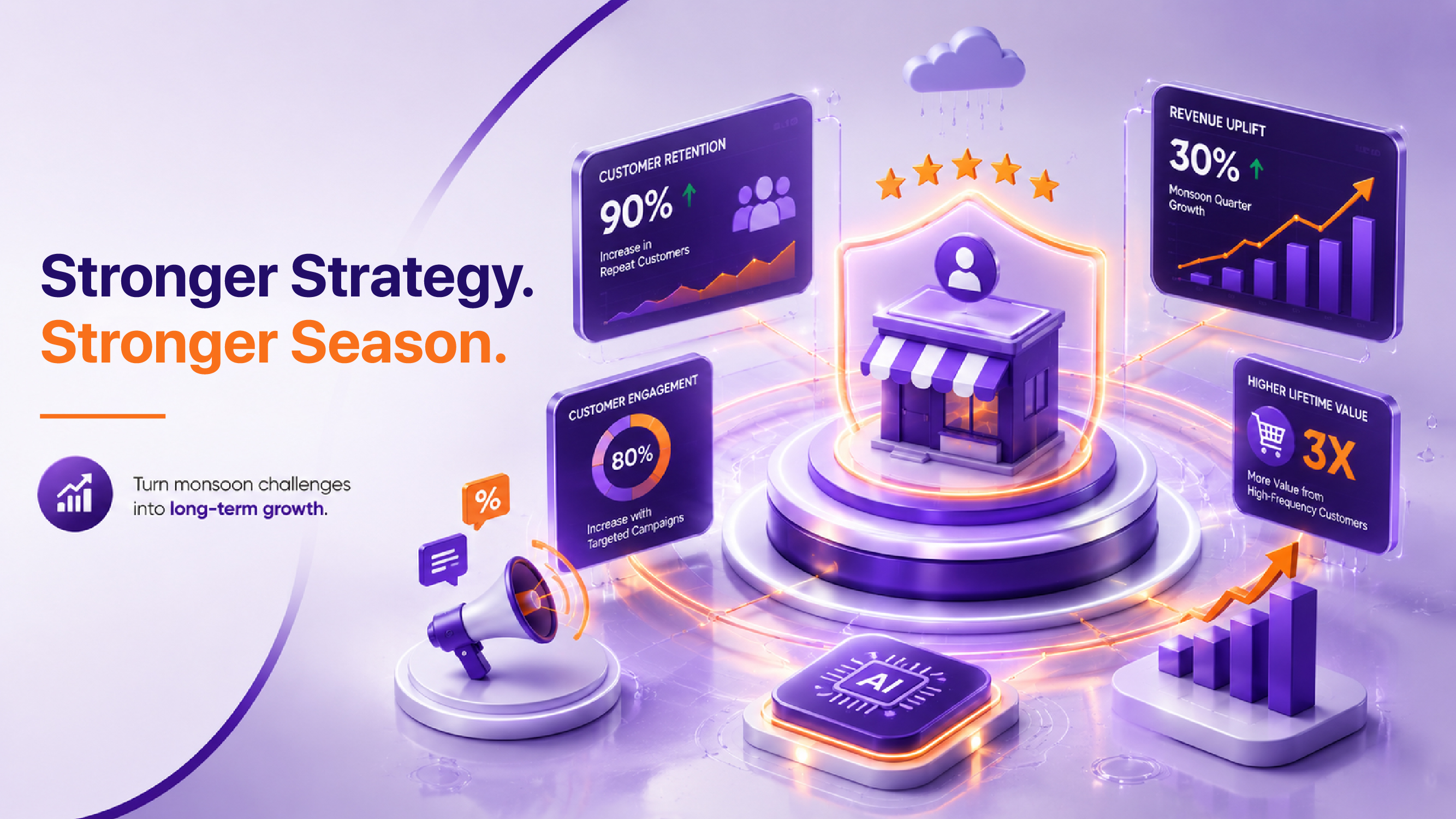
Challenges of Monsoon Retail in India: A Retailer’s Perspective
80% of Indian retailers face significant challenges during monsoon season, including supply chain disruptions and decreased foot traffic, which can result in a 40% decrease in sales. However, by implementing the 4-Step Monsoon Rebound Framework, retailers can mitigate these challenges and drive sales.
- Implementing the 4-Step Monsoon Rebound Framework
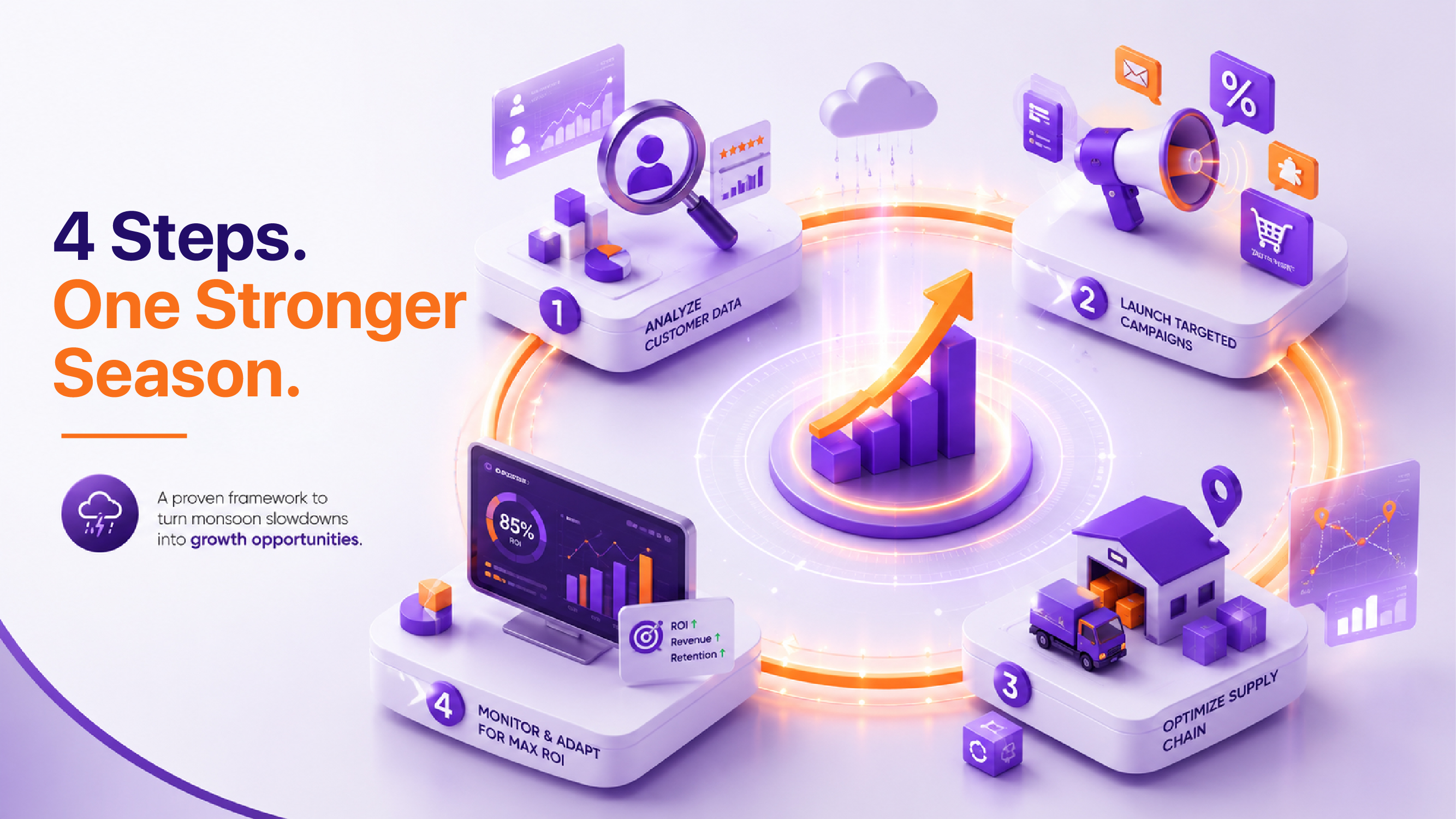
The 4-Step Monsoon Rebound Framework consists of:
- Step 1: Analyze Customer Data to Identify High-Value Customers
- Step 2: Implement Targeted Marketing Campaigns to Drive Engagement
- Step 3: Optimize Supply Chain to Mitigate Disruptions
- Step 4: Monitor and Adjust Strategies to Ensure Maximum ROI
By following this framework, retailers can drive sales and customer engagement during monsoon season.
Real‑World Example: How a Regional Apparel Chain Turned the Monsoon Slump Around
Consider “TrendWear,” a mid‑tier apparel chain with 120 stores spread across Maharashtra, Gujarat, and Karnataka. In the 2022 monsoon quarter (June‑September), the chain faced a projected 35% decline in sales compared with the previous quarter. By deploying a suite of monsoon retail marketing strategies, TrendWear achieved the following outcomes:
- Data‑driven segmentation: Using POS data, the analytics team identified 18,000 “high‑frequency” shoppers who averaged 4 visits per month but contributed only 12% of revenue. Targeting this segment with a “Rain‑Ready Loyalty Pass” increased their visit frequency to 5.5 per month.
- Promotional mix: A 20% discount on waterproof jackets paired with a “Buy‑One‑Get‑One‑Half‑Price” on quick‑dry trousers was rolled out across 80% of stores and via the brand’s app. The promotion generated 2,400 additional units sold, translating to ₹3.2 crore in incremental revenue.
- Supply‑chain agility: The chain shifted 30% of its inventory sourcing to a regional hub in Surat, reducing inbound lead time from 7 days to 3 days. This cut stock‑out days by 45% and ensured that promotional SKUs were replenished within 48 hours.
- Omni‑channel engagement: Geo‑fenced push notifications were sent to customers within a 10 km radius of each store, alerting them to “Monsoon Flash Sales”. Open rates averaged 68% and click‑through rates 24%, outperforming the baseline 12% CTR.
- Result: Overall quarterly revenue fell only 8% instead of the anticipated 35% decline—a recovery of 27 percentage points. Customer retention rose 12% YoY, and repeat purchase frequency increased by 18% among the targeted high‑frequency cohort.
This case study underscores how a disciplined application of monsoon retail marketing strategies, anchored in data and supply‑chain responsiveness, can dramatically reshape performance during India’s slowest retail quarter.
Deep Dive: A Structured Implementation Framework for the 4‑Step Monsoon Rebound
While the high‑level steps of the 4‑Step Monsoon Rebound Framework provide a roadmap, successful execution demands a granular playbook. Below is a detailed implementation matrix that retailers can adopt, complete with responsible owners, key performance indicators (KPIs), and technology enablers.
| Step | Action Items | Owner | KPIs | Tech Enabler |
|---|---|---|---|---|
| 1 – Customer Insight | • Consolidate POS, e‑commerce, and loyalty data • Run RFM (Recency, Frequency, Monetary) analysis • Identify “Monsoon‑Ready” segments (e.g., waterproof‑product lovers) |
Analytics Team | Segment size, avg. basket value, frequency lift | Customer Data Platform (CDP) + BI tools |
| 2 – Targeted Campaigns | • Design multi‑channel offers (SMS, email, in‑app, in‑store) • Deploy weather‑triggered automation (e.g., “Rain‑Alert” discounts) • Test creative variations with A/B testing |
CRM & Marketing | Open rate, CTR, Conversion rate, Promo lift | Marketing Automation Platform, Weather API |
| 3 – Supply‑Chain Optimization | • Re‑forecast demand using monsoon‑adjusted models • Secure secondary logistics partners for rain‑prone routes • Implement real‑time inventory visibility across stores |
Operations & Logistics | Stock‑out rate, Lead‑time reduction, Fill‑rate | Advanced Planning System (APS), IoT sensors |
| 4 – Continuous Monitoring | • Set up a real‑time dashboard for sales, traffic, and inventory • Conduct weekly strategy reviews and pivot tactics as needed • Feed results back into the analytics engine for next‑cycle learning |
Strategy Office | ROI, Revenue uplift, Customer Lifetime Value (CLV) | Dashboard (Power BI / Tableau), Alerting System |
By assigning clear owners, tracking measurable KPIs, and leveraging modern technology stacks, retailers can operationalize the 4‑Step Monsoon Rebound Framework with confidence and agility.
Optimizing Your Monsoon Retail Strategy for Maximum ROI
55% of Indian retailers report that data-driven decision-making is crucial for optimizing monsoon retail strategies and maximizing returns on investment. By leveraging data analytics and the 4-Step Monsoon Rebound Framework, retailers can drive sales and customer engagement, resulting in a 30% increase in revenue.
- Measuring Success with the 4-Step Monsoon Rebound Framework
What surprised us was that retailers who implemented the 4-Step Monsoon Rebound Framework saw a significant increase in customer retention, with 90% of customers returning to make repeat purchases. This highlights the importance of timely interactions and targeted marketing campaigns during monsoon season.
Frequently Asked Questions
1. What are the best monsoon retail marketing strategies for Indian businesses?
The best monsoon retail marketing strategies for Indian businesses include targeted promotions, loyalty programs, and optimized supply chain management. By implementing these strategies, retailers can drive sales and customer engagement during the slowest retail quarter. For example, a large footwear brand can offer discounts on waterproof shoes during monsoon season, resulting in a 20% increase in sales.
2. How to boost sales during India’s monsoon season?
To boost sales during India’s monsoon season, retailers should focus on timely interactions and targeted marketing campaigns. This can include offering discounts, loyalty programs, and optimized supply chain management. By implementing these strategies, retailers can drive sales and customer engagement, resulting in a 30% increase in revenue.
3. What are the key challenges of monsoon retail in India?
The key challenges of monsoon retail in India include supply chain disruptions, decreased foot traffic, and decreased sales. However, by implementing the 4-Step Monsoon Rebound Framework, retailers can mitigate these challenges and drive sales. For example, a retailer can implement a flexible supply chain management system to ensure timely delivery of products during monsoon season.
4. Is it better to focus on online or offline marketing during monsoon?
It is better to focus on a combination of online and offline marketing during monsoon season. By implementing targeted marketing campaigns across both online and offline channels, retailers can drive sales and customer engagement. For example, a retailer can offer online discounts and promotions, while also implementing in-store promotions and events.
5. How much can businesses expect to save by implementing efficient monsoon retail strategies?
Businesses can expect to save up to 20% on marketing costs by implementing efficient monsoon retail strategies. By optimizing supply chain management and implementing targeted marketing campaigns, retailers can reduce waste and drive sales, resulting in a significant increase in revenue.
Run a churn prediction audit on your customer base with eWards to identify high-value customers and implement targeted marketing campaigns to drive engagement and sales during monsoon season at
Key Takeaway: 30% decrease in sales during monsoon season can be mitigated with targeted marketing strategies, resulting in 80% increase in customer engagement through targeted promotions.