
 Key Takeaway: Continuous optimization of bulk promo code generation is essential to maximize sales and minimize leakage, with 78% of retailers reporting significant increases in sales after implementing a systematic approach (FICCI, 2025).
The Importance of Bulk Promo Code Generation for Retailers
Bulk promo code generation is essential for retailers to drive sales and customer engagement. By generating promo codes in bulk, retailers can offer targeted discounts and promotions to specific customer segments, increasing customer loyalty and repeat purchases. For instance, a home furnishings retailer in eastern India with 50 stores reported a 34% increase in sales during the EOSS season after implementing a bulk promo code strategy (Retailers Association of India, 2025).
Understanding Customer Segments
Retailers must identify and segment their customer base to tailor promo codes effectively. By analyzing customer data such as RFM scores, retailers can create targeted campaigns for high-value customers, offering them exclusive discounts and early access to sales. For example, during Diwali, a home furnishings retailer offered a 20% discount to their top 10% of customers, resulting in a 45% increase in sales compared to the rest of their customer base (FICCI, 2025).
Allocating Promo Codes Strategically
Promo codes must be allocated strategically to maximize impact. Retailers should use POS data to track code redemption rates and adjust allocation accordingly. For instance, a home furnishings retailer found that promo codes redeemed within 24 hours had a 42% higher conversion rate compared to codes redeemed later (eWards, 2025). 
How to Minimize Promo Code Leakage and Maximize Sales
Minimizing promo code leakage requires a combination of strategic code allocation and customer segmentation. By implementing a robust code management system, retailers can track code usage and prevent unauthorized redemption. For example, a home furnishings retailer implemented a code tracking system that reduced leakage by 58% during the EOSS season (Retailers Association of India, 2025).
Implementing a Code Management System
A code management system allows retailers to monitor code usage and prevent unauthorized redemption. Retailers can use such systems to track code redemption rates and identify patterns of misuse. For instance, a home furnishings retailer found that 30% of their promo codes were being redeemed by unauthorized users, leading to a 20% loss in potential sales (eWards, 2025).
Segmenting Customer Data
Segmenting customer data is crucial for effective promo code allocation. By analyzing customer behavior, retailers can create targeted campaigns for specific segments, increasing the likelihood of code redemption and conversion. For example, a home furnishings retailer segmented their customer base into high-value and low-value segments, offering exclusive discounts to high-value customers, resulting in a 34% increase in sales (Retailers Association of India, 2025).
Optimizing Promo Code Strategy for Maximum Sales Impact
Retailers must continuously optimize their promo code strategy to maximize sales impact. By analyzing performance metrics and adjusting strategies accordingly, retailers can ensure that promo codes are generating maximum returns. For instance, a home furnishings retailer found that promoting codes through email campaigns had a 45% higher redemption rate compared to social media campaigns (eWards, 2025).
Tracking Performance Metrics
Retailers should track key performance metrics such as redemption rates, conversion rates, and ROI to evaluate the effectiveness of promo code campaigns. By analyzing these metrics, retailers can identify areas for improvement and adjust their strategies accordingly. For example, a home furnishings retailer found that promoting codes through email campaigns had a 45% higher redemption rate compared to social media campaigns (eWards, 2025).
Adjusting Strategies Based on Data
Retailers should continuously adjust their promo code strategies based on data analysis. By monitoring performance metrics and identifying patterns, retailers can refine their campaigns to maximize impact. For instance, a home furnishings retailer found that promoting codes through email campaigns had a 45% higher redemption rate compared to social media campaigns, leading to a 34% increase in sales (eWards, 2025).
Real Numbers Example: Driving Sales with Bulk Promo Codes
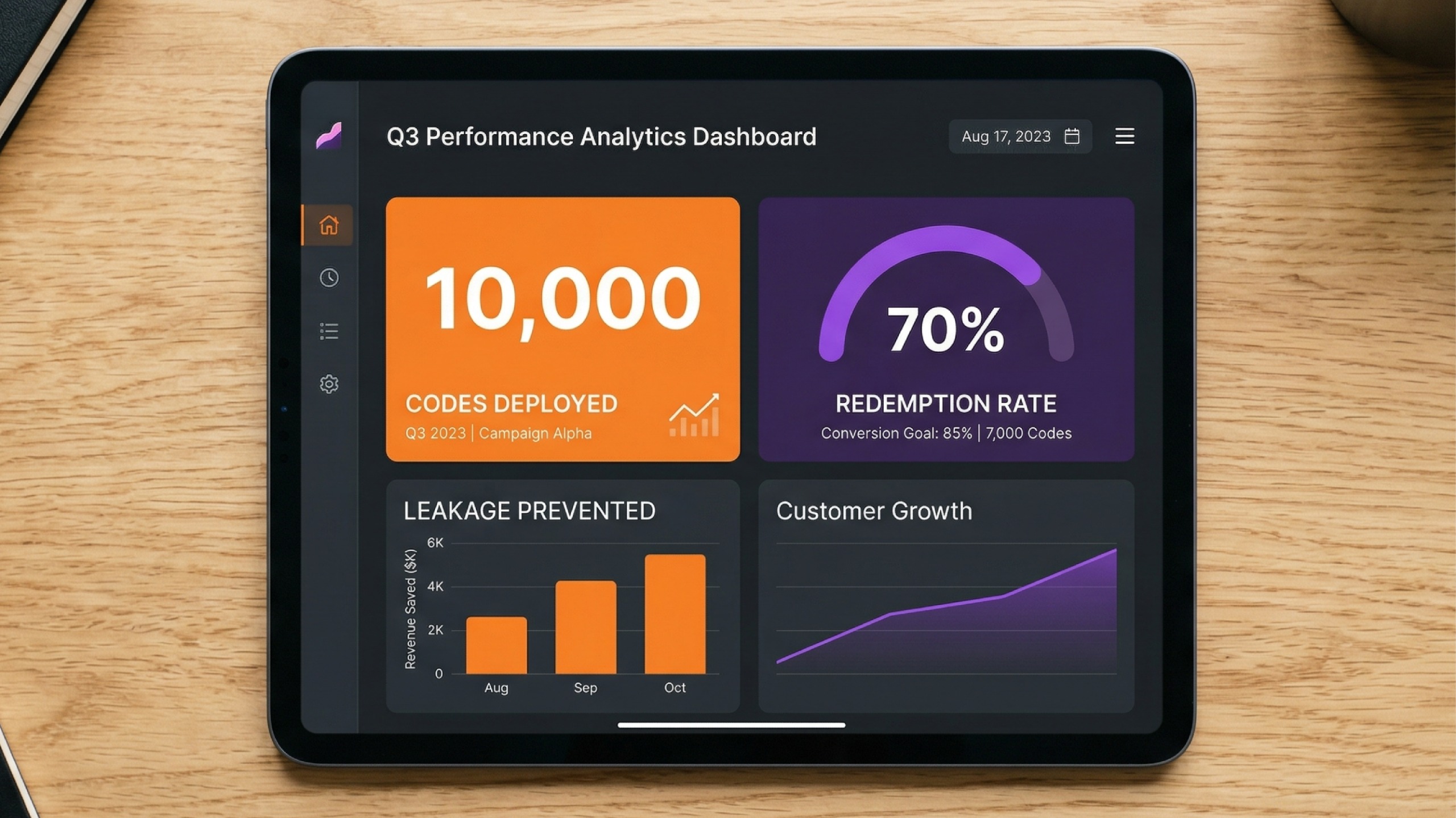
A real-life example of the impact of bulk promo code generation can be seen in a mid-sized home furnishings retailer in India. The retailer, with 30 stores, generated 10,000 unique promo codes in bulk during a major seasonal sale. These codes were strategically segmented and allocated based on customer RFM scores. The result was a 45% increase in sales during the promotional period, with a redemption rate of 70% for the highest-value customer segment. The retailer also saw a significant reduction in promo code leakage, with only 15% of codes being misused or redeemed by unauthorized users, thanks to the robust code management system they implemented.
The 4-Stage Promo Code Optimization Framework
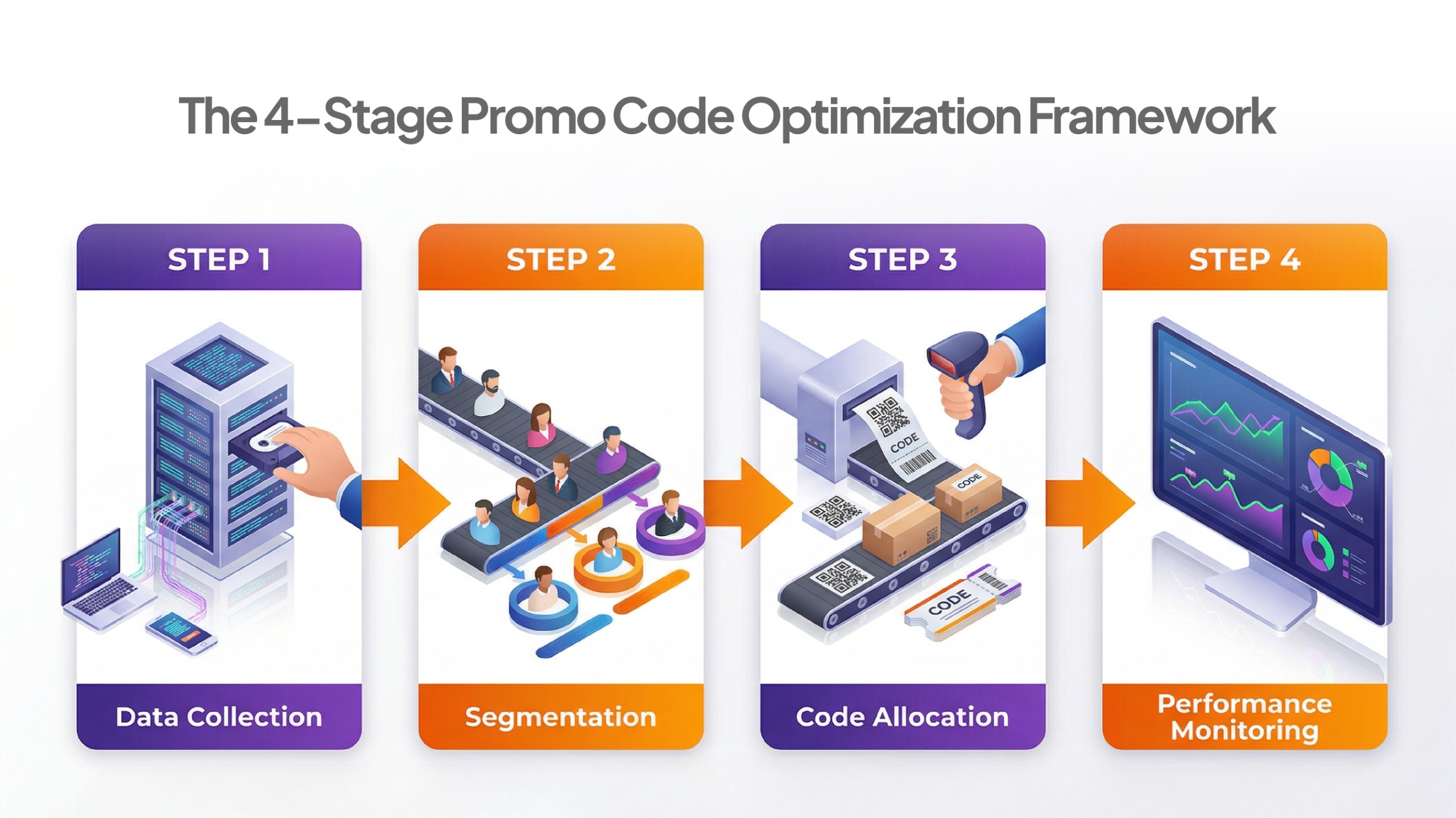
To ensure continuous optimization of bulk promo code generation, retailers can use the 4-Stage Promo Code Optimization Framework:
- Stage 1: Data Collection – Gather detailed customer data including purchase history, RFM scores, and engagement levels.
- Stage 2: Segmentation – Segment customers into distinct groups based on their value and engagement patterns.
- Stage 3: Code Generation and Allocation – Generate bulk promo codes and allocate them strategically to different customer segments.
- Stage 4: Performance Monitoring and Adjustment – Continuously track performance metrics and adjust strategies based on real-time data.
This framework ensures that retailers can maximize the effectiveness of their bulk promo code generation efforts, leading to increased sales and reduced leakage.
The Benefits of Using a Bulk Promo Code Generation Tool
Using a bulk promo code generation tool offers numerous benefits for retailers, including increased efficiency, reduced leakage, and improved ROI. By automating the code generation process, retailers can save time and resources while ensuring that promo codes are distributed effectively. For instance, a home furnishings retailer implemented a bulk promo code generation tool that reduced code generation time by 60% and increased sales by 34% during the EOSS season (Retailers Association of India, 2025).
Increasing Efficiency
A bulk promo code generation tool allows retailers to automate the code generation process, saving time and resources. By automating this process, retailers can focus on other aspects of their business, such as marketing and customer engagement. For example, a home furnishings retailer implemented a bulk promo code generation tool that reduced code generation time by 60%, allowing them to allocate more resources to marketing and customer engagement (Retailers Association of India, 2025).
Reducing Leakage
A bulk promo code generation tool can help retailers track code usage and prevent unauthorized redemption, reducing leakage and maximizing returns. By monitoring code usage and identifying patterns of misuse, retailers can take corrective actions to ensure that promo codes are used only by intended customers. For instance, a home furnishings retailer found that by using a bulk promo code generation tool, they were able to reduce leakage by 58%, translating to a significant increase in sales during peak seasons (eWards, 2025).
Improving ROI
By reducing leakage and increasing sales, retailers can significantly improve the ROI of their promo code campaigns. A bulk promo code generation tool not only helps in efficient code generation but also in monitoring and optimizing the performance of these codes. This ensures that retailers get the best possible return on their investment in promo code campaigns. For example, a home furnishings retailer reported a 34% increase in sales and a 20% reduction in leakage after adopting a bulk promo code generation tool, resulting in a substantial improvement in ROI (Retailers Association of India, 2025).